October in Greece feels like a month caught between two seasons.
At the beginning of the month, you can still find warm days, blue skies and people swimming in the sea, particularly in southern Greece. By the end, mountain villages are surrounded by autumn colour, chestnuts are roasting, olives are being harvested and many of the islands have begun settling back into their quieter, local rhythm.
It might not be the Greece of the postcards, but October can reveal a completely different side of the country.
Check out these highlights:
1. Cultural Events and Celebrations
Ohi Day – October 28:
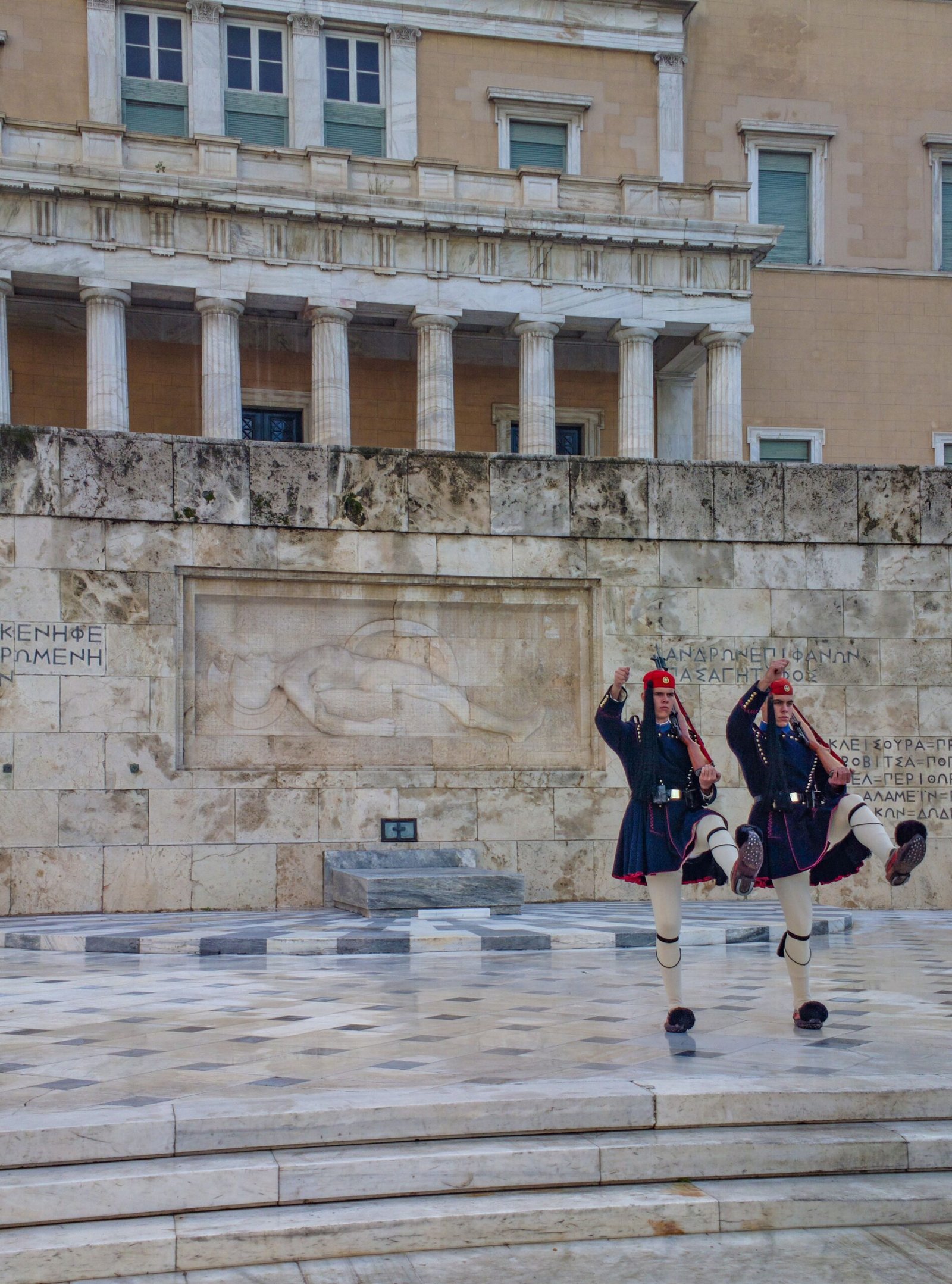
One of Greece’s two major national holidays, Ohi Day commemorates Greece’s rejection of the Italian ultimatum in 1940 and the country’s resistance during World War II. Across Greece you’ll see Greek flags hanging from balconies, school and military parades, commemorations and church services. October 28 is also a public holiday. Source
There is an extra bonus for travellers: state-run archaeological sites, historical sites and museums offer free admission on October 28. Source
Dimitria Festival – Thessaloniki:
Autumn is a particularly interesting time to visit Thessaloniki. The city hosts its annual Dimitria cultural festival, with theatre, music, dance, exhibitions and performances taking place across the city. Source
2. Religious Celebrations
Feast of Saint Demetrios – October 26:
Saint Demetrios is one of Greece’s best-known saints, but his feast day is especially important in Thessaloniki, where he is the patron saint of the city.
Celebrations centre around the Basilica of Agios Dimitrios and traditionally include church services and a procession associated with the saint. The feast also coincides with commemorations of Thessaloniki’s liberation in 1912, making October 26–28 a particularly significant few days in the city. Source
3. The Tourist Season Begins to Wind Down
October is when you really begin to notice Greece changing gears.
Early October on many islands can still feel surprisingly summery. Beaches are quieter, the sun can still be warm and you may even have stretches of perfect swimming weather.
But as the month progresses, seasonal hotels, beach bars, excursions and restaurants begin closing for winter, particularly on smaller islands. Ferry services can also become less frequent.
This doesn’t mean the islands themselves “close”. Larger islands and towns with substantial permanent populations continue normally; it is the summer tourism layer that gradually disappears. Source
If you are travelling later in October, destinations such as Crete and Rhodes, or year-round cities like Athens and Thessaloniki, can be easier choices than very small, tourism-dependent islands.
4. Harvest Season
October is one of those wonderful months where travelling through Greece suddenly makes you aware of just how agricultural the country still is.
Olive Harvest:
The olive harvest begins in October in parts of Greece and continues over the following months depending on the region and variety. Green table olives are among the first to be picked. Source
If you’re driving through rural Greece, you may begin seeing nets laid underneath olive trees and families working together in the groves.
Chestnut Season:
Head into the mountains and October means κάστανα — chestnuts.
Chestnut festivals take place around Greece, often accompanied by local wine, tsipouro, music and huge quantities of roasted chestnuts. Kastanitsa in the Peloponnese is particularly known for its late-October celebration, while villages in areas including Nafpaktia, Central Greece, Crete and Macedonia have their own autumn traditions. Source
Saffron Harvest:
One of the more unusual October experiences happens around Krokos, Kozani, where Greece’s famous red saffron is grown. The delicate flowers are harvested by hand during October and November. Source
Wine Country:
While we often associate the Greek grape harvest with August and September, some northern wine regions continue harvesting into October and early November. Areas around Naoussa, Amyntaio and Drama are particularly interesting at this time of year. Source
5. Autumn Comes to the Mainland
This may be one of the most overlooked reasons to visit Greece in October.
Greece isn’t only white houses and blue water.
In mountainous regions, forests begin turning shades of yellow, orange and rust. Stone villages, walking trails, rivers and mountain tavernas suddenly come into their own.
Places such as Zagori, Pelion, Meteora, Arcadia and mountainous Macedonia offer a very different image of Greece from the islands most visitors know.
The cooler weather can also make October much more comfortable for walking, hiking and exploring archaeological sites than the intense heat of July and August. Greece’s geography means conditions can vary enormously, however, with mild weather on the coast while mountain areas are considerably cooler. Source
6. Can You Still Have an Island Holiday?
Yes — particularly in early October.
The sea has had the entire summer to warm up, and in southern destinations there can still be beautiful beach days. Crete and the Dodecanese, including Rhodes, are particularly worth considering if you’re hoping to squeeze a little more summer out of the year.
But October isn’t guaranteed beach weather.
Rain becomes more possible, evenings are cooler and the difference between the first and last weeks of the month can be significant. Greece’s climate also varies considerably between regions. Source
For me, though, that is part of October’s appeal.
You might spend one day sitting beside the Aegean in the sunshine and another eating roasted chestnuts in a mountain village.
It is Greece slowly changing seasons in front of you.
And if your idea of Greece has always been August, packed beaches and blazing summer heat, October might introduce you to a version of the country you didn’t know was there.