One of the strangest things about Greek names is how normal they feel to us – until you stop and really think about them.
You can be at a family gathering and hear someone call out Alexander, Eleni, Dimitri, Penelope, Ariadne, Athena, Leonidas, Socrates, Antigone or Olympia, and nobody blinks.
To Greeks, these are not “ancient history names.” They are cousins, aunties, uncles, neighbours, classmates, grandparents, godchildren and people you actually know.
That is what makes Greek naming conventions so interesting. Ancient Greek names are not just sitting in mythology books or museum captions. Many of them are still alive in Greek communities today.
Not all of them are equally common, of course. Some are everyday names. Some are more old-fashioned. Some feel poetic, dramatic or deliberately classical. Some are more likely to appear in Greece than in the diaspora, and others have become popular internationally too.
But the point is this: these names never fully disappeared; they are still being used.
A Note Before We Start
This list focuses mainly on names from ancient Greek mythology, ancient Greek history, literature, philosophy and classical culture.
That means I am not including the many Greek names that are strongly associated with Christian saints, martyrs, or Orthodox tradition (except for a couple of exceptions), even when those names are Greek in language.
Greek naming culture is layered. A name can be ancient, Christian, Byzantine, regional, family-based and modern all at once.
But for this list, I wanted to look specifically at names with ancient Greek associations that are still heard among Greek people today (note, the names in this list might have Christian name days).
Why So Many Ancient Names Survive in Greek Families
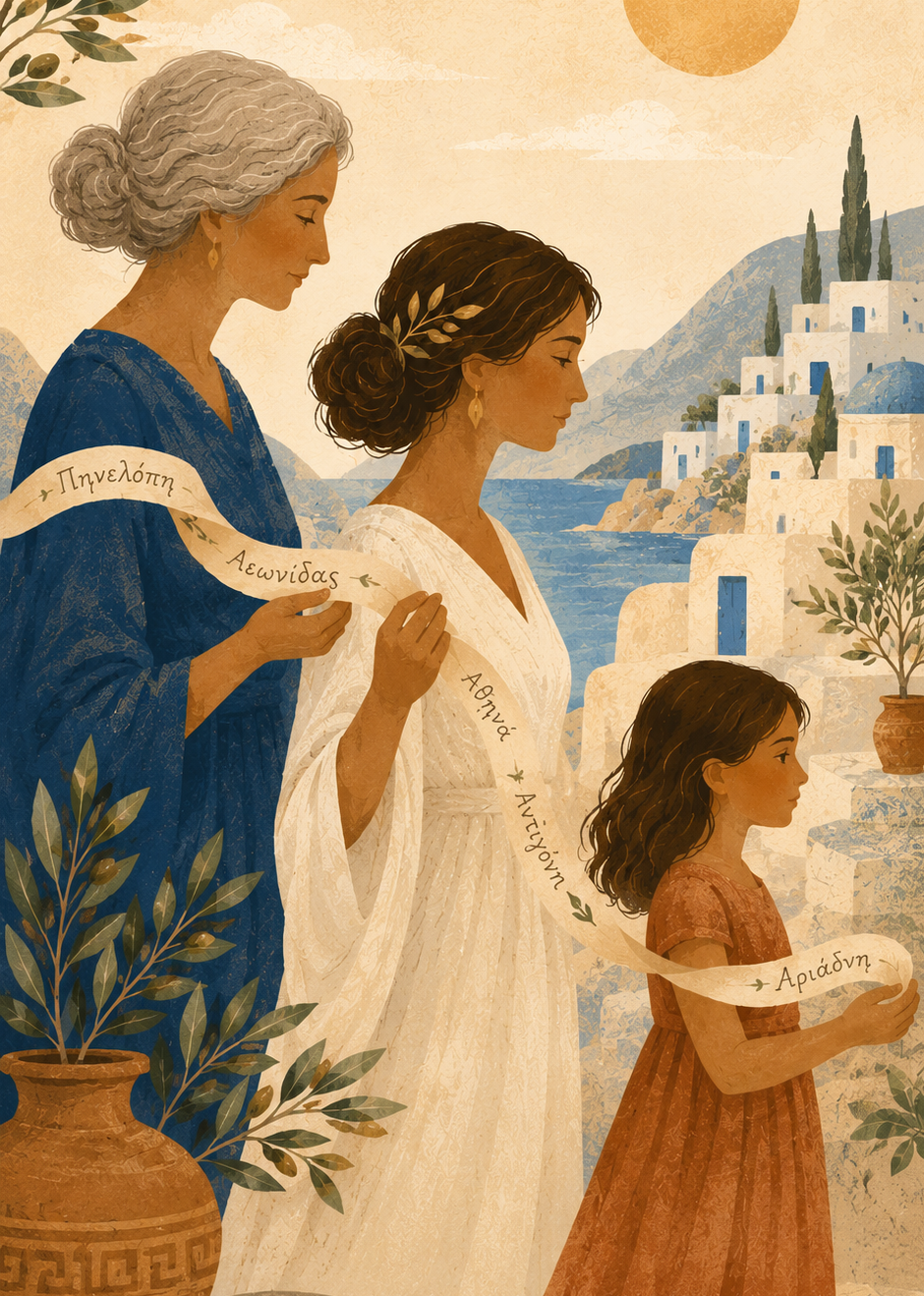
One reason these names are still around is the Greek tradition of naming children after grandparents.
This is where cultural continuity becomes very practical. A parent may not choose a name because they are thinking about mythology, ancient history or classical Greece. They may choose it because it belonged to their parents and are carrying on this long tradition.
And that is how a name keeps travelling.
A little girl may be called Penelope because of her grandmother, not because her parents were trying to make a literary statement. A boy may be called Leonidas because it was his grandfather’s name, not because the family is obsessed with Sparta. That is the beauty of it. It’s a strange continuity.
Greek names are not preserved only because people deliberately revive them. Many survive because families repeat them. The ancient name becomes a family name, and the family name becomes part of everyday life.

Got a name day coming up?
Skip the last-minute scramble, greek greeting has a personalised card ready for their giorti in minutes.
Find their name day cardThe Common Ones Everyone Knows
Some ancient Greek names are so familiar that we almost forget how old they are.
Alexander / Alexandros / Alexandra is one of the obvious examples. Because of Alexander the Great, the name is known around the world. But in Greek communities, it is not exotic or unusual. It is just a normal name.
Helen / Eleni is another one. The name immediately brings to mind Helen of Troy, but Eleni is also one of the most familiar Greek names you will hear in everyday life.
Demetrios / Dimitris / Dimitra also belongs in this category. The name is connected to Demeter, the ancient Greek goddess of agriculture and harvest. In modern Greek communities (and Orthodox Christian countries), Dimitris and Dimitra are still very common.
Mythological Names Still in Use
Some of the most beautiful Greek names still used today come straight from mythology.
Athena / Athina
Athena was the goddess of wisdom, strategy and war, and the patron goddess of Athens. Athina is still used as a girl’s name today, and very popular. It has a strong, unmistakably Greek feeling, yet does transcend borders.
Penelope
Penelope, the wife of Odysseus, is remembered for patience, intelligence and loyalty. Today, Penelope is still used by Greeks, often with nicknames like Penny or Popi. This is another name that is popular across other countries.
Ariadne / Ariadni
Ariadne helped Theseus escape the labyrinth after the Minotaur. Ariadni is a beautiful name that still feels ancient, feminine and elegant. Whilst it is not common, it is not completely unfamiliar.
Daphne / Dafni
Daphne is connected with the laurel tree and the myth of Apollo and Daphne. It is a soft, botanical name that works in both Greek and English-speaking settings, and is quite common across the Western world.
Chloe
Chloe comes from ancient Greek and has associations with fresh growth and greenery. It was also connected with Demeter. Today, Chloe is widely used internationally, but its Greek roots are very old.
Phoebe / Foivi
Phoebe is an ancient Greek name associated with brightness. In Greek, Foivi is still used, though it is not as common as names like Eleni or Dimitra. It’s probably more common in English speaking countries!
Aphrodite
Aphrodite is one of the boldest mythological names still used today. It is not subtle. It immediately brings to mind the goddess of love and beauty. But yes, Greeks do still use it, and quite commonly.
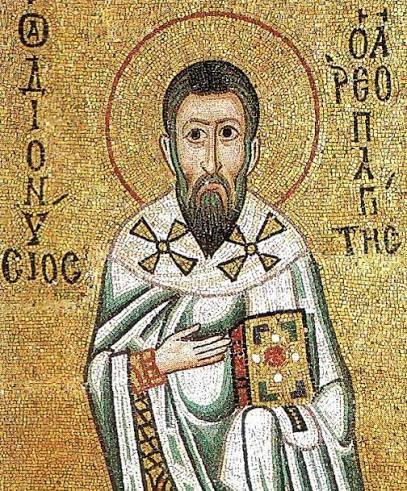
Dionysios / Dionysis
Dionysus was the god of wine, theatre, ecstasy and celebration. The modern Greek forms Dionysis or Dionysios are still heard, though the name also has later religious associations, ensuring its continued popularity.
Heraklis / Hercules
Yep, this is not a joke. Heraklis comes from Heracles, the great hero of Greek mythology. In English, he is often called Hercules through the Roman form, but the Greek name Heraklis is still used and not uncommon, even in the Greek diaspora.
Odysseas
Odysseas comes from Odysseus, the hero of the Odyssey. It is one of those names that feels deeply literary and heroic, but still real enough to meet in everyday Greek life.
Achilleas
Achilleas comes from Achilles, the legendary warrior of the Iliad. It is still commonly used as a Greek male name and carries a strong mythological weight.
Artemis
Artemis was the goddess of the hunt, wilderness and young women. Artemis is still used as a Greek name today and has a clean, strong, ancient feel.
Telemachus
Telemachus was the son of Odysseus and Penelope. Telemachus is less common, but it is still a recognisable and used Greek name.
Antigone
Antigone is one of the great names of Greek tragedy. It is still used today, and it has that serious, dramatic, literary quality that many Greek names carry so well.
Electra / Ilektra
Electra is another name from Greek tragedy and mythology. In Greek, you may see it as Ilektra. It is still used and feels striking, sharp and classical.
Persephone
Persephone, daughter of Demeter and queen of the underworld, has become more visible internationally in recent years. Among Greeks, it remains a recognisable ancient name, even if not one of the most common.
Ourania
Ourania was one of the Muses, associated with astronomy. Ourania is still used as a Greek name and has a beautiful celestial meaning.
Eurydice / Evridiki
Eurydice is known from the myth of Orpheus and Eurydice. The modern Greek form Evridiki is still used and has a poetic, old-world sound.
Agamemnon
Agamemnon is one of the great heavy names from Greek mythology, best known as the king of Mycenae and leader of the Greek forces in the Trojan War. It is not common, and it is definitely not a light, casual name. But it is still used, and that is exactly what makes it interesting.
Nephele
Nephele was a cloud nymph in Greek mythology. It is not one of the most common names, but it is used and has a soft, atmospheric quality. This one seems to have gained more popularity in modern times.
Danae
Danae was the mother of Perseus. Danae is used as a Greek girl’s name and feels both ancient and modern. It’s another one that has gained more recent popularity.
Orestis
Orestis comes from Orestes, one of the major figures of Greek tragedy. It is still used today and has a strong classical feel.
Kalliope
Kalliope was the Muse of epic poetry. The name is still used in Greek communities, often with nicknames like Popi or Kalli, and heavily associated with certain regions.
Names from Ancient Greek History, Philosophy and Public Life
Not all ancient Greek names come from mythology. Some come from real historical people: generals, philosophers, writers, rulers and public figures.
Socrates / Sokratis
Sokratis is still used as a Greek male name. Of course, it immediately brings to mind Socrates the philosopher, but in Greek life it can also simply be someone’s uncle, cousin or friend.
Aristotle / Aristotelis
Aristotelis comes from Aristotle, one of the most influential philosophers in history. It is less common than names like Dimitris or Nikos, but it is still a real Greek name.
Leonidas
Leonidas is strongly associated with the Spartan king who fought at Thermopylae. It is still used today and has a strong, heroic image.
Pericles / Periklis
Pericles was one of the most famous leaders of ancient Athens. Periklis is still used as a Greek name, though it has a more formal or old-fashioned feel.
Demosthenes / Dimosthenis
Demosthenes was the great Athenian orator. Dimosthenis is not extremely common, but it is still a Greek name you may encounter.
Lycurgus / Lykourgos
Lykourgos is associated with ancient Sparta and lawgiving tradition. It is rare, but it belongs clearly to the ancient Greek naming world. This is a name I have come across.
Cleopatra / Kleopatra
Cleopatra is Greek in origin and strongly associated with the Ptolemaic queen of Egypt. In Greek communities, Kleopatra or Cleopatra is still used, though it has a dramatic and regal feel. This is also a name of I have come across.
Aspasia
Aspasia was an influential woman associated with classical Athens and Pericles. Aspasia is still used as a Greek female name and feels elegant, intellectual and distinctly old Greek.
Lysimachos
Lysimachos was the name of one of Alexander the Great’s successors. It is rare today, but it is still recognisable as an ancient Greek name.
Andronike / Androniki
Andronike is an ancient Greek female name built from Greek elements connected with “man” and “victory.” It is not one of the everyday Greek names, but it is a real ancient-rooted name that still appears in Greek naming culture. Like many rarer names, it may survive through family lines rather than popularity charts.
Olympia
Olympia immediately connects to ancient Olympia and the Olympic Games. It is still used as a Greek girl’s name and carries a strong cultural association.
Xenophon / Xenofon
Xenophon was an ancient Greek historian, soldier and philosopher. Xenofon is rare but still usable and recognisably Greek.
Euripides / Evripidis
Euripides was one of the great tragedians of ancient Greece. As a modern first name, Evripidis is uncommon but still exists.
Names with Ancient Greek Meaning or Literary Roots
Some names are not always thought of as “mythology names,” but they still come from ancient Greek language, literature or ideas.
Agatha / Agathi
Agatha comes from the Greek word for “good.” It has ancient Greek roots, although its continued use is also connected to Christian tradition.
Efrosini / Euphrosyne
Euphrosyne was one of the Charites, or Graces, in Greek mythology. The modern Greek form Efrosini is still used, though it may feel more traditional or old-fashioned.
Why These Names Matter
What I love about these names is that they show how Greek culture carries memory. A name like Penelope is not only a character from the Odyssey. It can also be your cousin. A name like Leonidas is not only a Spartan king. It can be the boy in your class. A name like Antigone is not only Greek tragedy. It can be someone’s yiayia, auntie, neighbour or daughter.
The ancient world does not only survive in ruins, statues and school textbooks. It survives in ordinary life.
In the way names are passed from grandparents to grandchildren, sometimes without anyone making a big announcement about “preserving heritage.” It just happens, because that is how Greek families often work. And in that simple repetition, something ancient stays alive.
A Living List, Not a Museum List
Of course, not every ancient Greek name is equally common today.
You are much more likely to meet an Alexander, Eleni, Dimitri, Athena or Penelope than an Agamemnon, Lykourgos or Telemachos.
But that does not mean the rarer names have disappeared. Many Greeks still know people with names that sound like they walked straight out of mythology, philosophy or ancient history.
That is the thing about Greek names. Some are ordinary. Some are dramatic. Some are poetic. Some are heavy with history.
But they are not dead names, they are living ones. And that might be one of the most beautiful examples of cultural continuity Greeks still carry.
P.S Here is a great Reddit-sourced list of the most popular girls and boys names in Greece in 2022.