For some Greek couples (in Greece & the diaspora), the Orthodox wedding ceremony remains the most important and meaningful expression of identity in marriage, carrying deep spiritual symbolism and continuity with centuries of faith. At the same time, other couples prefer have a civil ceremony, and in these cases, there might be a desire retain a sense of Greek identity in a way that is respectful, appropriate, and still meaningful.
One helpful way to approach this is by looking beyond the Church and into the earlier layers of Greek tradition. Long before the Orthodox sacrament was established, marriage in ancient Greece was already structured, symbolic, and centred around family and community. While the religious meaning has since evolved, many of the underlying ideas such as transition, unity, and public recognition, remain consistent. These older customs can offer a natural foundation for incorporating Greek elements into a civil ceremony without attempting to replicate the Church.
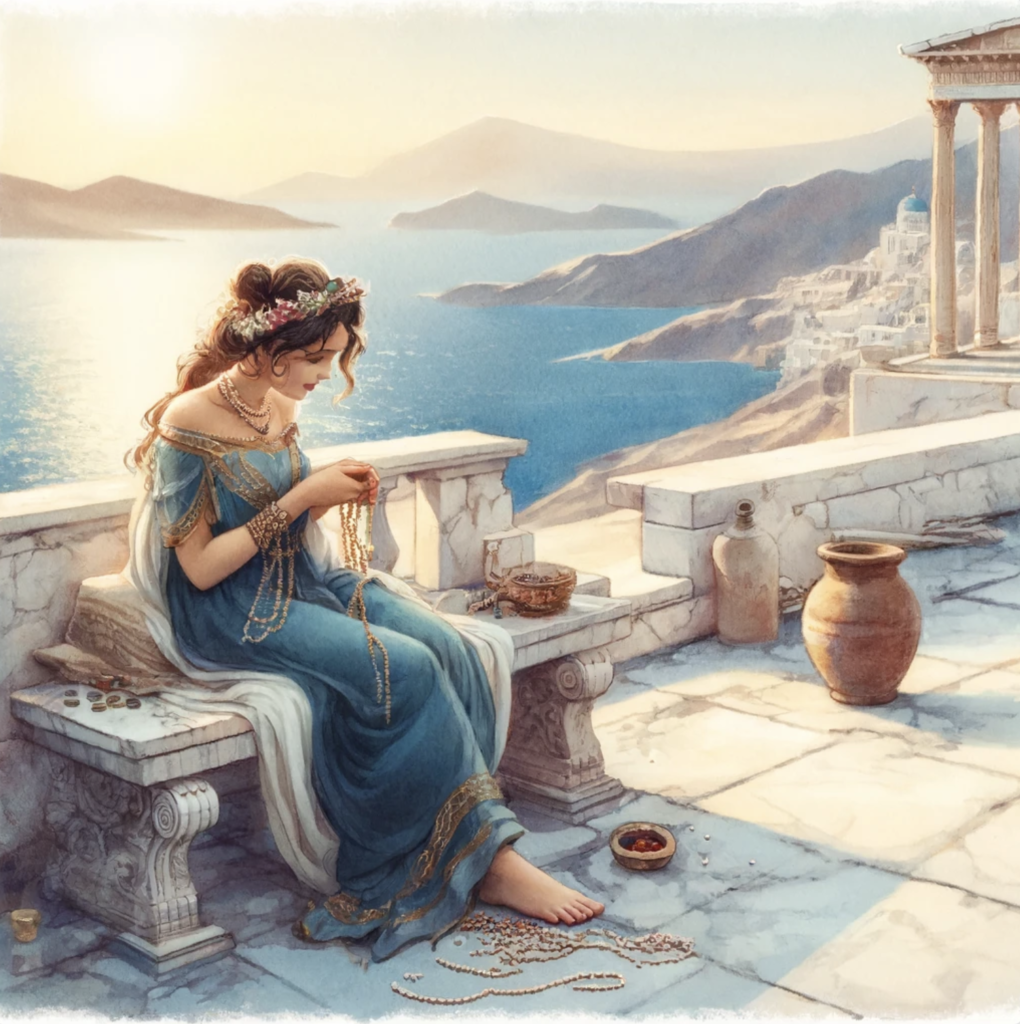
In ancient Greece, the wedding was not a single event but a sequence, beginning with preparation. The bride’s ritual bathing and dressing were significant moments, often shared with female relatives and close companions. While the original meaning related to purification, the modern equivalent can simply be a more intentional approach to the morning of the wedding. Gathering family, playing familiar music, and creating a calm, supportive environment reflects this same sense of transition into a new stage of life.
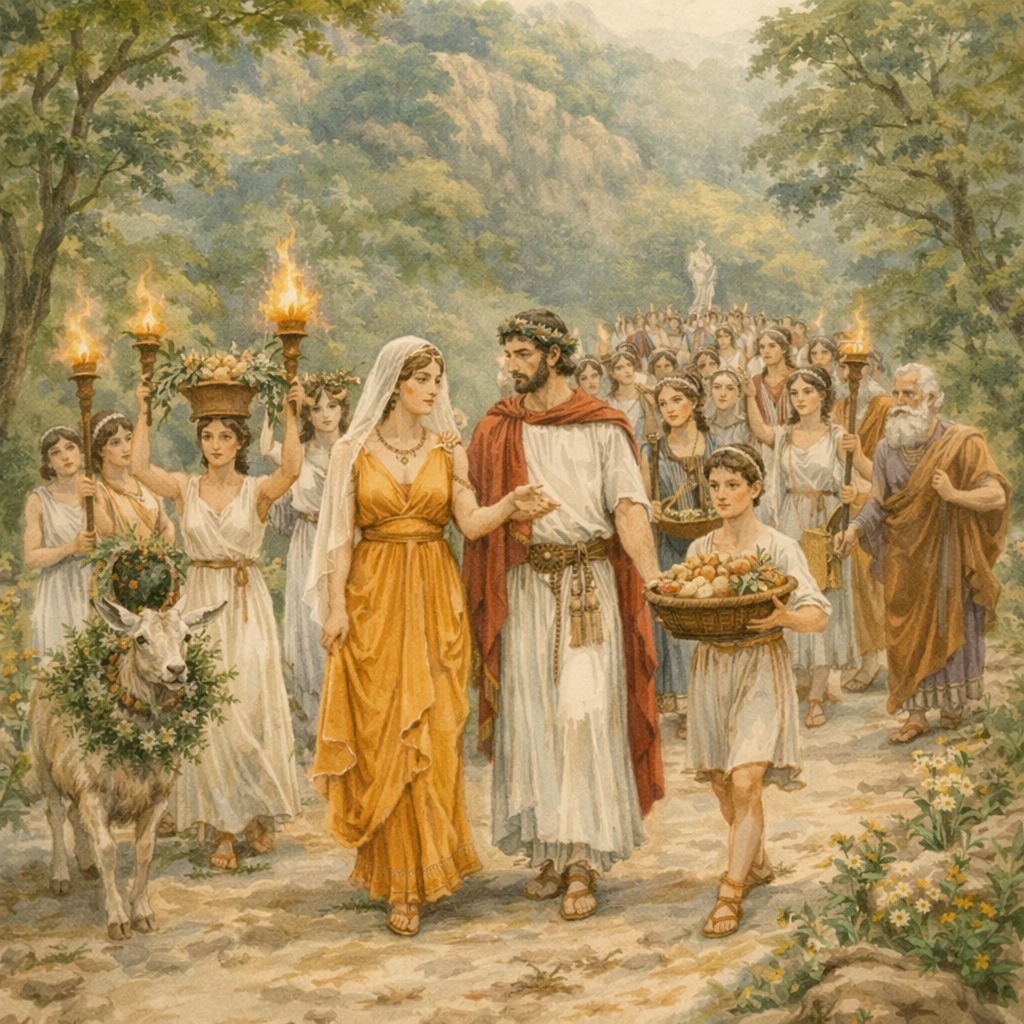
The wedding day itself included a formal procession, where the bride was accompanied from her family home to the groom’s household. This movement was not only practical but symbolic, marking the shift from one family unit to another. In a civil ceremony today, this idea can be expressed through the way the couple enters the space. Whether walking in together or being accompanied by parents, the entrance can be treated as a meaningful moment rather than a simple formality.
Another element found in ancient ceremonies was the sharing of food, often bread or fruit, symbolising unity and the beginning of a shared life. This can be adapted in a contemporary setting through a small, deliberate gesture during or immediately after the ceremony, such as sharing a sweet or a sip of wine. The emphasis is not on performance, but on acknowledging the joining of two people in a simple and recognisable way.
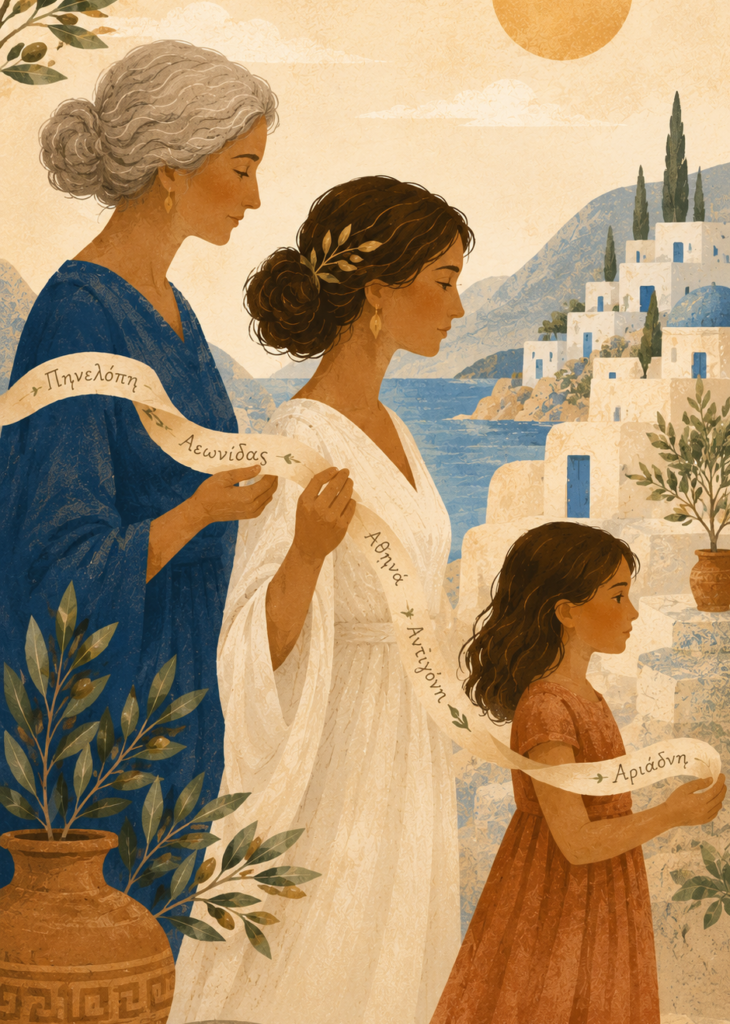
Family presence was central to ancient Greek weddings and continues to be a defining feature of Greek culture today. Including parents or close relatives through readings, acknowledgments, or brief spoken contributions reflects this continuity. It reinforces the idea that marriage is not only a union between two individuals, but also a connection between families.
Finally, ancient weddings concluded with a clear transition into married life, often marked by the couple being escorted to their new home. While this specific custom is no longer relevant in its original form, the underlying idea can still be applied. A considered exit from the ceremony, supported by music or the presence of family, provides a sense of closure and signals the beginning of the couple’s shared life.
Read more about Ancient Greek weddings here.
Whilst the most recorded element Greek weddings emphasises domestic rituals , there are some visual artefacts you can incorporate into your modern wedding to make a connection.
Ancient Laurel or Olive Crowns
In ancient Greece, wreaths made of olive, myrtle, or laurel were used to symbolise honour and celebration. Wreaths were also present at weddings, though often included plants associated with fertility.
This can be adapted for modern times; engage a florist to create these for you, or If you are feeling up to it, try make them yourself! This is a very natural bridge between ancient and modern Greek identity.
Loutrophoros (Water Vessel)
In ancient weddings, a vessel called a loutrophoros was used to carry water for the bridal bath.
You can adapt this for your wedding by using Greek style jars throughout the decor.
Use a ceramic vessel as a styling object, or table centrepieces. Fill it them with olive branches or flowers. Place it at the entrance or near the ceremony space.
You can see some ideas from Pinterest here.
Almond Treats
Whilst sugared almonds (koufeta) didn’t technically exist until at least the late Roman Empire, almonds and honey sesame treats did and were central to the celebration, symbolising fertility and prosperity.
In modern times, carry this tradition through by including koufeta in favours, or offering almond macarons after the ceremony. You can also present them in a nice box and include explanation if your audience isn’t Greek.
Bread, Fruit or Honey Element
This has been somewhat covered above, Ancient couples shared food — often bread or quince with honey — to symbolise sweetness and unity.
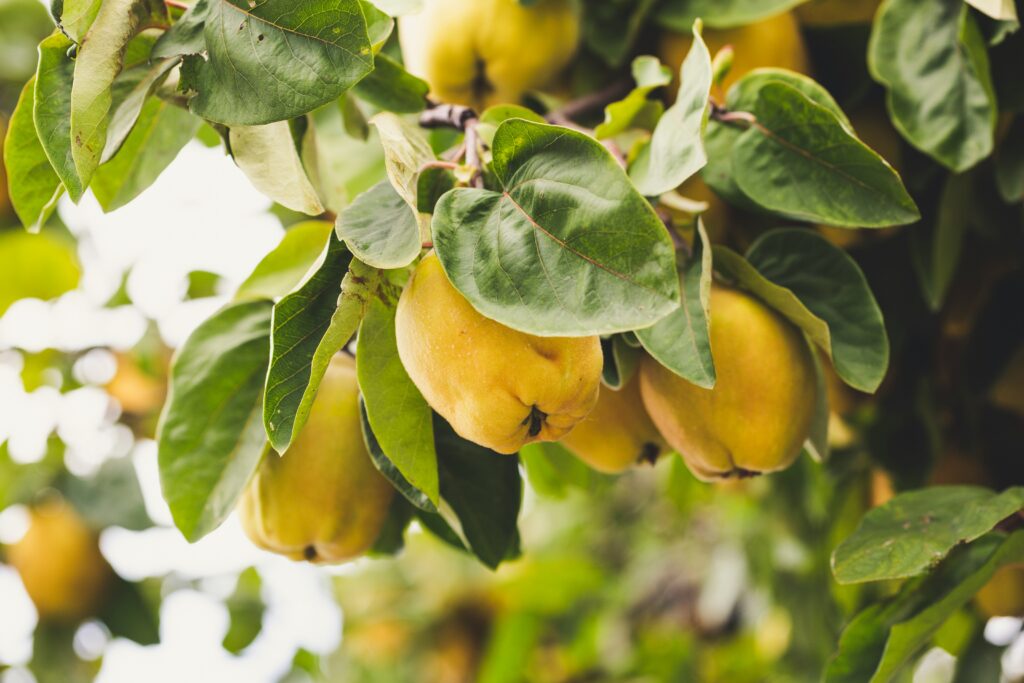
Set up a small table and incorporate a bread breaking and shared spoonful of honey into your ceremony. Quince was particularly meaningful and represented a sweet and harmonious union (it was also sacred to Aphrodite). Quinces are beautiful fruits and would also work incorporated into theming and decor.
Olive Branches
This is probably the easiest and most recognisable symbol. They represent peach and renewal, so not out of place at weddings.
Use them in across the decor, on tables, bouquets, or ceremony structures. They can also be included as part of a symbolic gesture (holding, exchanging, etc.).
Lamps, Candles or Soft Lighting
Ancient weddings often involved torches during the procession. You don’t need fire, obviously — but the idea of light marking transition still works. Many already do incorporate candles into weddings. Candles lining the aisle or entrance, or surrounding the couple are common decor options. In terms of incorporating the tradition into the ceremony, many people adopt the tradition of a unity candle these days.
Textiles & Fabric
In ancient Greece, clothing and woven textiles had meaning — especially in the transition to married life. Brides wore reds saffron and yellow, which were symbols of fertility (Fun fact: Brides often wore a belt which was often tied in a special knot , called the “knot of Heracles” that only the groom was meant to untie).
Today, this can be adopted though the inclusion of a family heirloom fabric incorporated into the outfit, or even subtle incorporation of the red colour.
Conclusion
Incorporating Greek tradition into a civil ceremony does not require imitation of the Orthodox sacrament, which holds its own distinct and sacred place. Instead, by drawing on the deeper historical customs that predate it, couples can create a ceremony that feels grounded, culturally connected, and entirely appropriate to its context.