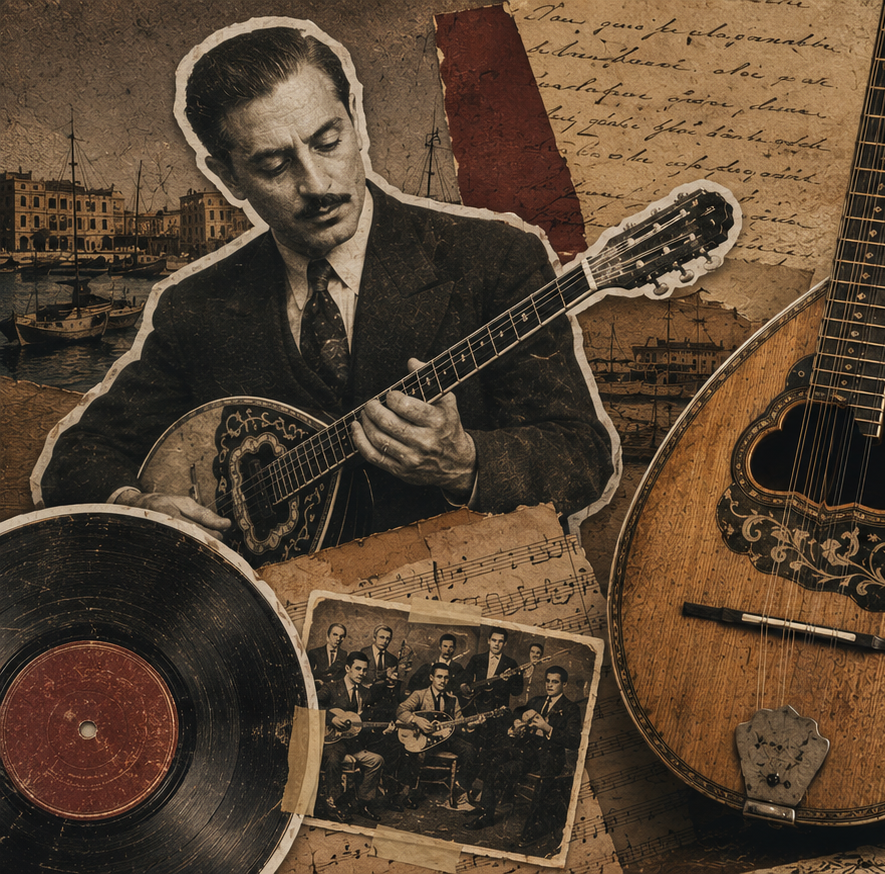
Few genres of music carry the emotional weight of rebetika. Raw, smoky, improvised, and deeply tied to hardship, rebetika songs have often been described as the “Greek blues.” The comparison appears everywhere — in documentaries, travel guides, and even academic writing. But is it just a catchy label for foreigners, or is there something genuinely similar between the two musical traditions?
While rebetika and the blues emerged in completely different societies, they share surprising parallels: both grew from marginalised communities, both gave voice to pain and displacement, and both transformed suffering into art. Yet rebetika also has its own unique history rooted in the ports, prisons, cafés, and refugee neighbourhoods of the eastern Mediterranean.
What Is Rebetika?
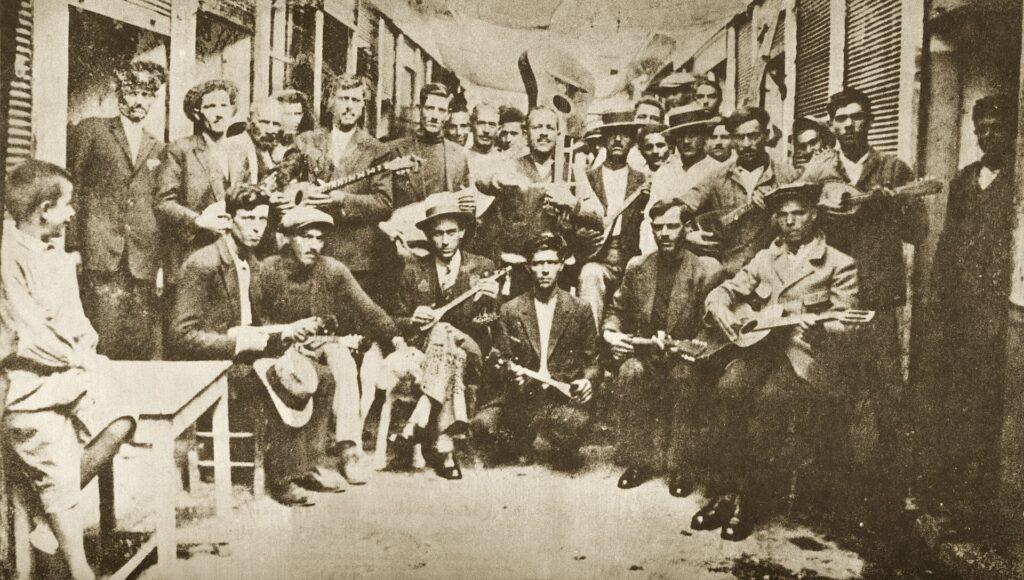
Rebetika (or rebetiko) is an urban Greek music genre that developed mainly between the late 19th century and the 1950s. It flourished in port cities such as Piraeus, Thessaloniki, and Smyrna (modern İzmir), especially among workers, refugees, sailors, and people living on the social margins.
The music blended influences from Ottoman café music, Byzantine chant, Greek folk traditions, and Middle Eastern melodies. Its signature instruments — especially the bouzouki and baglamas — created a sound that was both mournful and hypnotic.
The turning point for rebetika came after the 1922 Asia Minor Catastrophe, when over a million Greek refugees arrived from Anatolia into mainland Greece. Many brought musical traditions from Smyrna and Constantinople, reshaping the sound of urban Greek music forever.
This wasn’t polished salon music. Rebetika belonged to taverns, hash dens (tekedes), docks, and backstreets. Authorities often viewed it with suspicion, and during the Metaxas dictatorship in the 1930s, many songs were censored.
That outsider status is one reason people compare it to the blues.
The Shared Roots of Pain and Survival
The blues emerged in the American South among African American communities in the late 19th century, shaped by slavery, segregation, poverty, and displacement. Rebetika emerged from different historical conditions, but the emotional landscape feels strangely familiar.
Both genres became the music of people pushed to society’s edges.
Typical rebetika themes include exile and homesickness, prison life, poverty, doomed romance, addiction, police harassment, everyday survival, and nostalgia for lost homelands. Blues lyrics often revolve around heartbreak, injustice, loneliness, wandering, and hardship in remarkably similar ways.
Neither genre tried to hide suffering. Instead, suffering became the material for artistic expression.
This is why listeners unfamiliar with Greek history often instinctively call rebetika “Greek blues.” Even without understanding the lyrics, the emotional atmosphere feels recognisable.
Music Born in the Margins
Another major similarity is social class.
Early rebetika was not elite music. Middle- and upper-class Greeks frequently looked down on it as crude or immoral. The bouzouki itself was once associated with criminality and low-status entertainment.
The same thing happened with blues music in the United States. Before becoming globally celebrated, the blues was often dismissed by mainstream society as rough, vulgar, or dangerous.
In both cases, the music eventually moved from the margins into the cultural mainstream.
Today, rebetika is considered one of Greece’s most important musical traditions. In 2017, UNESCO added rebetika to its list of Intangible Cultural Heritage. The blues underwent a similar transformation, eventually becoming foundational to jazz, rock, and modern popular music worldwide.
Improvisation and Emotional Honesty
There’s also a musical reason for the comparison.
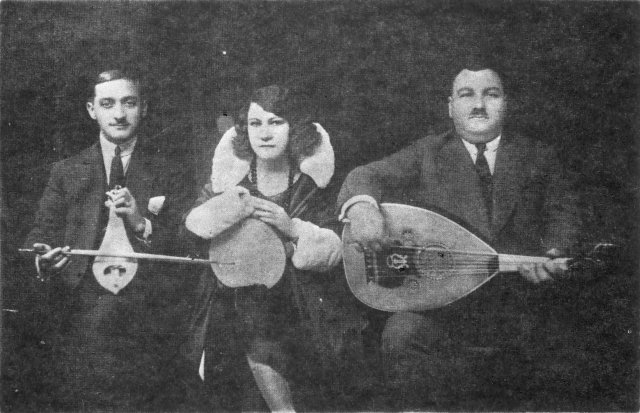
Both blues and rebetika rely heavily on emotional phrasing and improvisation. In rebetika, musicians often improvise instrumental passages called taximia, where the melody wanders freely and expressively before returning to rhythm. Blues guitar solos serve a similar emotional purpose.
Neither tradition depends on technical perfection. What matters is feeling.
A rebetika singer might stretch a note until it sounds like grief itself. A blues guitarist might bend a string until it almost breaks. The effect is different, but the emotional philosophy is closely related.
The Refugee Experience at the Heart of Rebetika
One reason rebetika remains powerful today is that many of its themes still feel modern.
Displacement, migration, identity, and nostalgia continue to shape societies around the world. Songs written by refugees from Smyrna in the 1920s still resonate because they speak to universal human experiences: losing home, rebuilding life, and trying to preserve memory through music.
This emotional continuity may explain why younger generations — both in Greece and internationally — continue discovering rebetika today.
Essential Rebetika Artists to Explore
- Markos Vamvakaris — often considered the patriarch of Piraeus-style rebetika
- Vassilis Tsitsanis — helped bring rebetika into the mainstream
- Roza Eskenazi — one of the genre’s most iconic voices
- Anestis Delias — legendary musician associated with the darker side of rebetika culture
- Rita Abatzi — major figure of the Smyrnaic tradition
Listening to them makes the “Greek blues” comparison immediately understandable — even if the music ultimately transcends the label.
Final Thoughts
Rebetika are called the “Greek blues” because both genres emerged from hardship, marginalization, and emotional truth. They gave ordinary people a language for pain, exile, longing, and survival.
But rebetika is more than a Greek version of something American.
It is a uniquely eastern Mediterranean art form shaped by migration, empire, urban poverty, and cultural mixing. The comparison to blues opens the door — but the deeper you go, the more distinct and fascinating rebetika becomes.
If you want to explore rebetika further, the documentary Rembetika: The Blues of Greece, narrated by Anthony Quinn, is an excellent introduction to the music, culture, and history behind the genre.