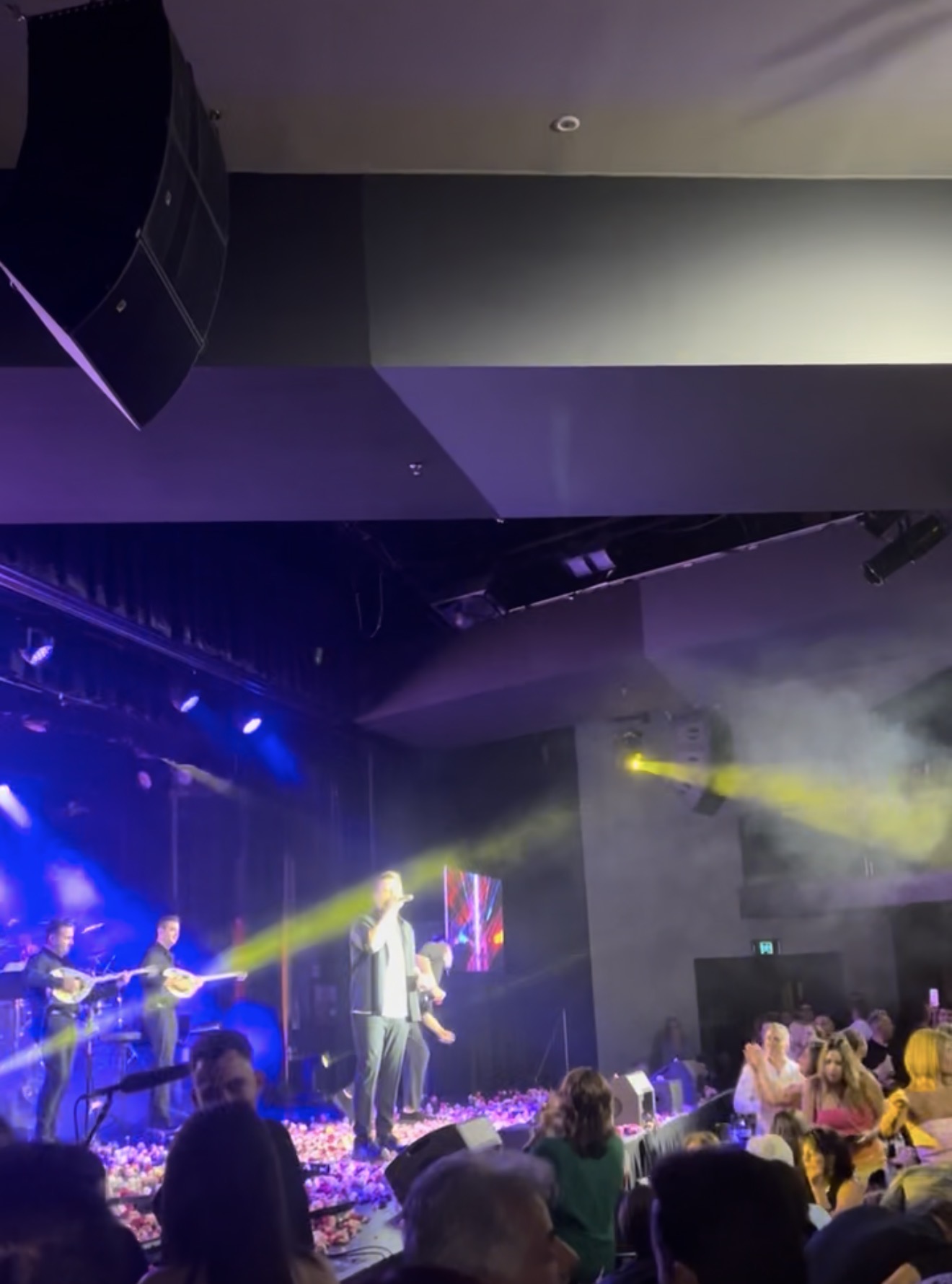
Bouzoukia nightclubs are one of the most recognisable parts of modern Greek nightlife. Built around live music performances– usually laïkó and contemporary Greek music–they became especially popular in the second half of the 20th century and remain a major part of entertainment culture in Greece and Greek diaspora communities.
Origins: From Rebetiko to the Bouzouki Stage
If you’ve ever heard plates smashing, seen flowers raining down on a stage, or watched a singer command a room until sunrise, you know you’re at the bouzoukia. These nightclubs a living expression of Greek music, identity, and nightlife culture that has evolved over more than a century.
The origins of bouzoukia are closely tied to the rise of the bouzouki and rebetiko music in the early 20th century. Rebetiko developed mainly in port cities like Piraeus, particularly among working-class communities and refugees who arrived from Asia Minor after 1922.
The music dealt with subjects like migration, poverty, prison life, love, and everyday survival. Early performances usually took place in small taverns and underground spaces known as tekedes, long before bouzoukia became associated with large nightlife venues and mainstream entertainment.
By the 1940s and 1950s, musicians such as Markos Vamvakaris and Vassilis Tsitsanis helped bring the bouzouki into mainstream Greek music. As rebetiko gradually became more accepted socially, the foundations were laid for the laïkó music scene and the bouzoukia culture that would emerge in later decades.
👉 Explore more about rebetika here
The Rise of Bouzoukia in Greece
One interesting way to trace the evolution of bouzoukia is through Greek cinema. Watching films from different decades, you can almost see the culture developing in real time.
In movies from the 1950s and 60s, the venues are usually small and intimate. The singer performs only a few metres from the audience, tables are packed tightly together, and the atmosphere feels closer to a music tavern than a modern nightclub. The focus is mainly on the performance itself, with bouzouki players and singers at the centre of the night.
This is a great scene from a 1968 movie called Μια κυρία στα μπουζούκια (A Lady at the Bouzoukia) depicting what it was like.
By the late 1970s and 80s, the venues start becoming larger and more theatrical. Stages become more elevated, lighting becomes more noticeable, and the separation between performers and audience grows. It’s almost a concert hall with banquet seating. Around this period, flower throwing gradually replaced plate smashing in many venues, partly for safety and practical reasons.
Then by the 1990s, bouzoukia had expanded into the large multi-level venues many people recognise today. Big stages, elaborate lighting systems, flower throwing, premium table service, and high-profile performers became standard parts of the experience, especially in Athens.
Then by the 1990s, bouzoukia culture exploded. Lavish venues opened in Athens and Thessaloniki, with high production values, celebrity performers, and premium pricing. It became a status symbol as much as a night out.
It can be said that the changes in bouzoukia reflected broader shifts in Greek society as well. Postwar urbanisation, rising incomes, television culture, and celebrity culture all played a role in transforming live music venues into large-scale nightlife entertainment spaces.
What To Expect at the Bouzoukia
A typical bouzoukia night includes:
- Headline singers
- Live orchestras featuring bouzouki players
- Guests seated at tables, ordering drinks and (maybe) food
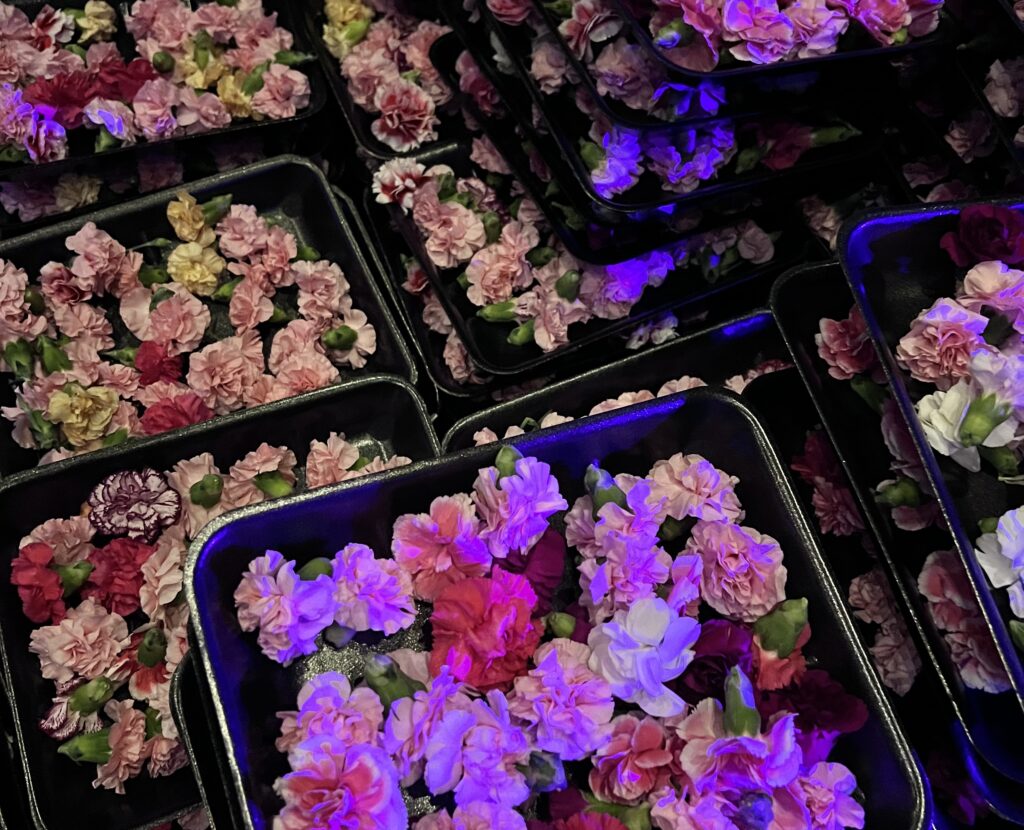
- The iconic flower throwing (modern substitute for plate smashing)
These nights don’t start until late—and often end at sunrise.
Bouzoukia in the Greek Diaspora
As Greeks migrated abroad–especially after WWII–so did their music and nightlife traditions. Bouzoukia found new homes in cities with large Greek communities:
- Melbourne & Sydney
- New York (Astoria)
- Toronto & Montreal
- London
In these diaspora settings, bouzoukia became more than entertainment—they were cultural anchors. They helped first and second generation Greeks connect with their heritage.
Interestingly, diaspora bouzoukia often froze somewhere in terms of style. A Greek nightclub in Melbourne or Astoria might preserve the taverna style feel of a 70s or 80s Athenian venue long after trends changed in Greece itself. For example, in Australia, smaller Greek venues and live music nights still survive, although their numbers have declined over time (some native Greeks might jokingly call these ‘skiladika’ – kind of like the dive bar version of bouzoukia). Meanwhile, major artists visiting from Greece usually perform in larger, professionally staged venues that resemble the modern bouzoukia format seen in Athens today.
Final Thoughts
Bouzoukia have remained an important part of Greek nightlife because the experience goes far beyond simply watching a performance. A night at the bouzoukia usually combines live music, socialising, drinking, singing, and direct interaction between performers and audience.
While the venues themselves have changed over the decades, certain parts of the culture have stayed consistent. Live music remains at the centre, audiences are expected to participate rather than sit passively, and the atmosphere is often emotional, loud, and highly social.
Practices like flower throwing and napkin throwing are part of that atmosphere. Although they are sometimes dismissed as clichés outside Greece, within bouzoukia culture they are closely connected to the idea of kefi: emotional release, enjoyment, and letting go for the night. The performance does not stay confined to the stage, and it is not unusual for audience members to join singers during the night as well.
Even today, when nightlife in many places is dominated by DJs and electronic music, bouzoukia continue to revolve around live performers and the relationship between singer and audience.
Whether in Athens, Thessaloniki, Melbourne, or Astoria, bouzoukia continue to occupy a unique place within Greek social and cultural life.
A note on the movie clip: The woman spits on the money and puts it on the bouzouki players head – this custom is called a “hartoura” and is the equivalent of making a song request or dedication and also clearing the dancefloor for oneself. It could also be seen as a kind of tip.