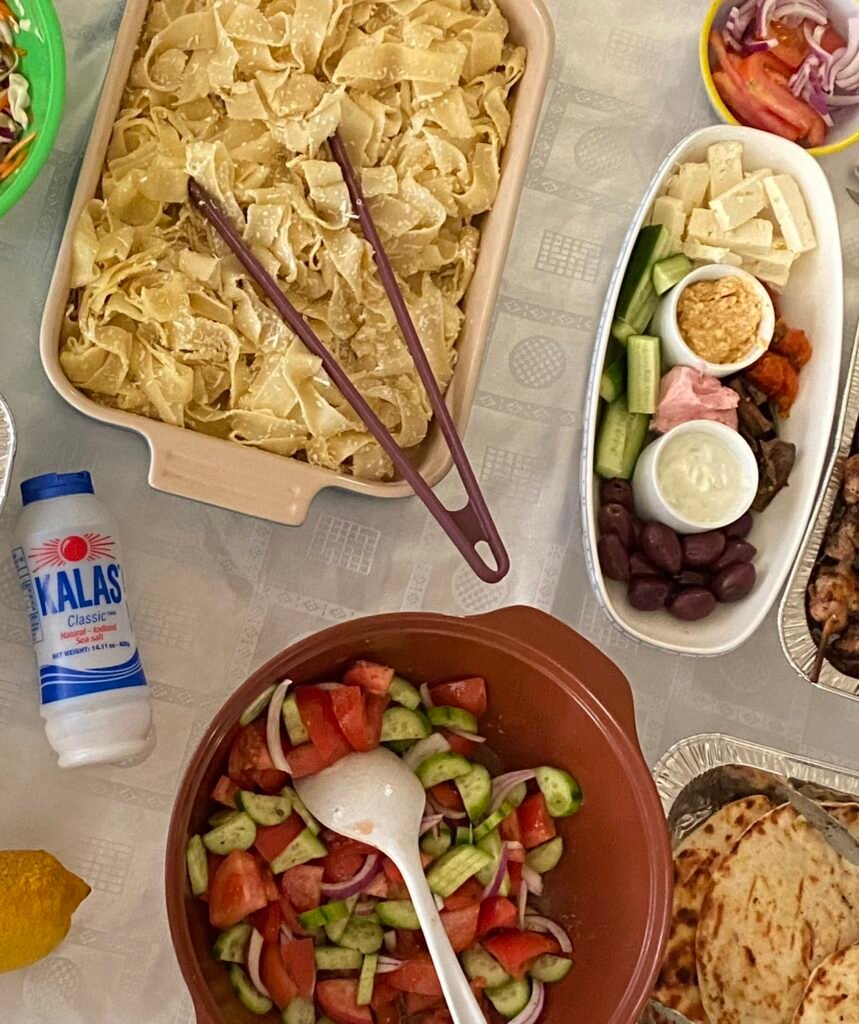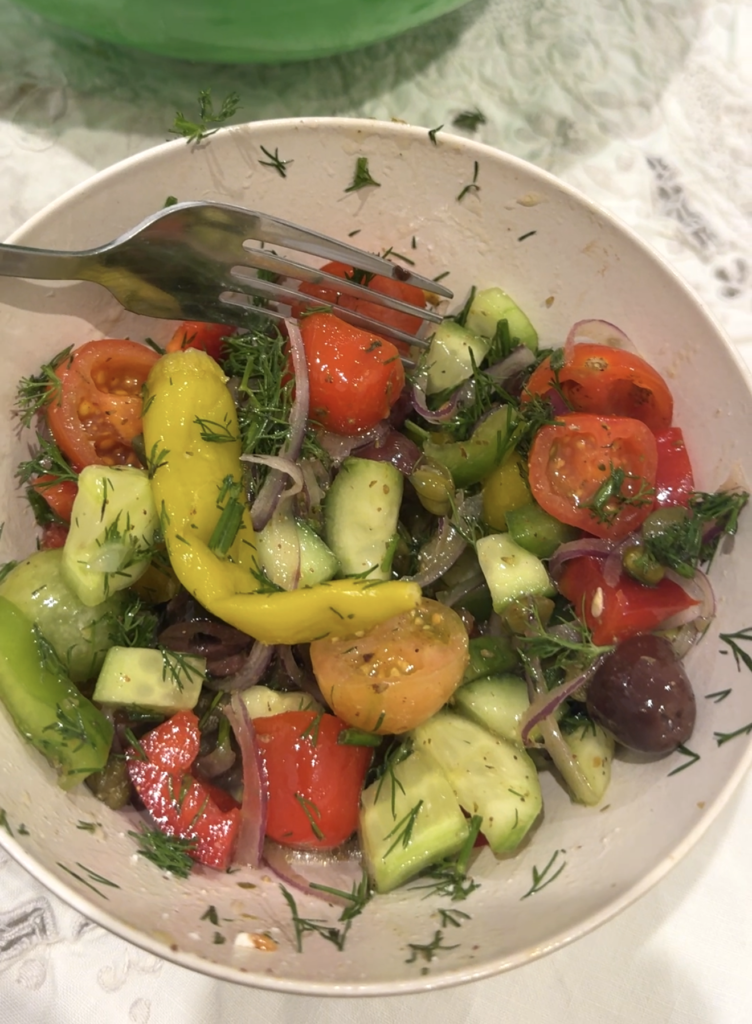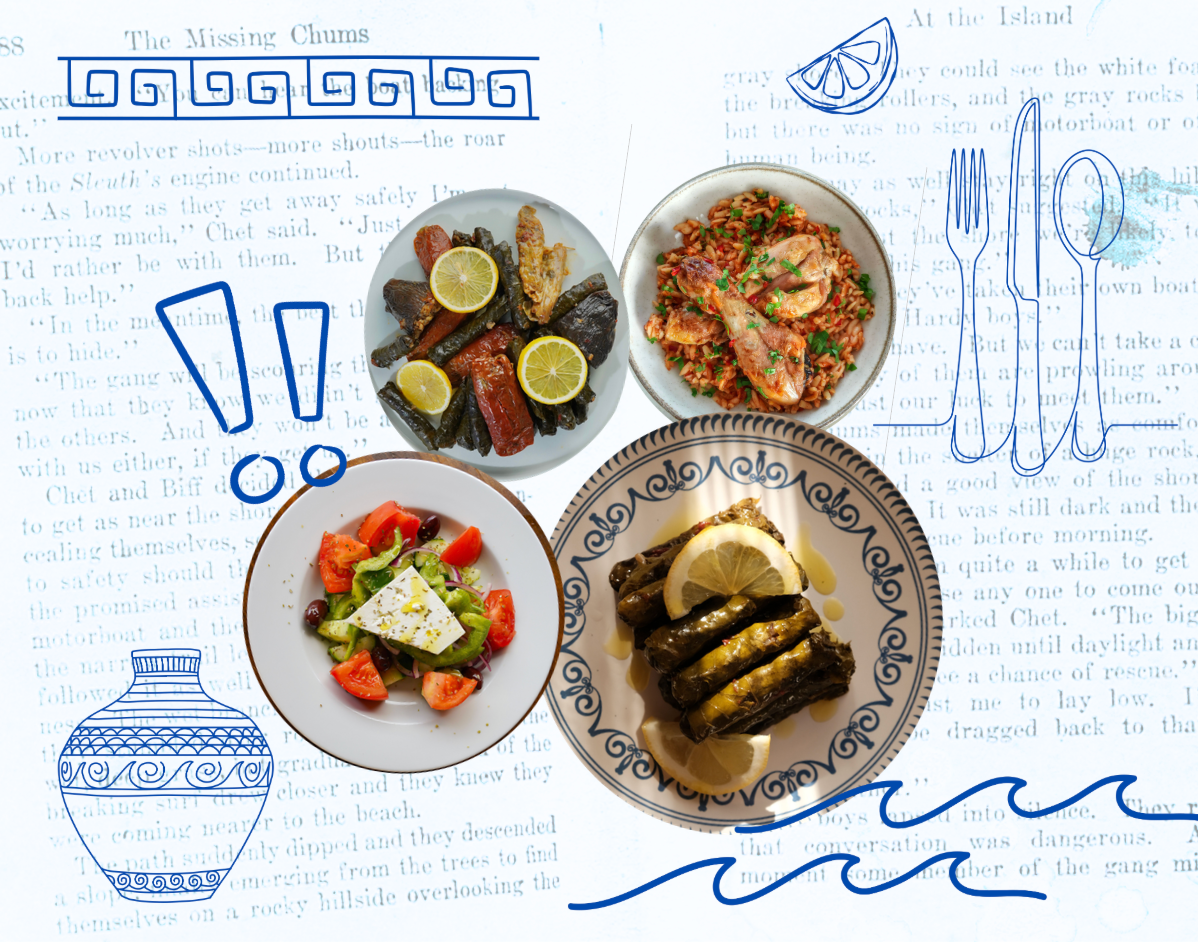
Post Greek food online long enough and eventually someone will arrive to tell you that it isn’t Greek.
“That’s Turkish.”
“Greeks stole that.”
“None of this is actually Greek.”
Usually the evidence amounts to the same thing: a similar dish exists in Turkey, the Ottoman Empire once ruled Greece, therefore the Greek version must has been copied from the Turks. But history doesn’t work like that.
The history of Greek food is far more complicated. Modern Greek cuisine reflects thousands of years of Ancient Greek, Roman, Byzantine, Ottoman and wider Eastern Mediterranean influence — and those influences rarely travelled in only one direction.
The Eastern Mediterranean was one of the world’s great cultural crossroads long before either modern Greece or Turkey existed. Greeks, Egyptians, Persians, Romans, Jews, Armenians, Arabs and, later, Turkic peoples traded, migrated, fought, married and lived beside one another for thousands of years. Guess what? Their food travelled too.
If we are going to seriously talk about who influenced whom, we need to start considerably earlier than the Ottoman Empire.
Eastern Mediterranean cultures had been crossing paths for millennia
Greek food was being shaped by contact with neighbouring cultures thousands of years before the Ottoman period.
The Greeks interacted extensively with Persia, Egypt and the Levant before becoming part of an even larger Mediterranean world under Rome.
Archaeological evidence shows Persian dining customs and cultural influences appearing in the Greek world centuries before the Ottoman Empire existed. Greek culture, in turn, spread deep into the former Persian territories during the Hellenistic period. Before that, Greek amphora holding olive and and wine had been found all over the Mediterranean basin.
Egypt was also deeply connected to the Greek world through trade and migration, and later through Greek-speaking centres such as Alexandria. Rome expanded these connections even further.
The Ancient Greek and Roman diet already contained many of the foundations we associate with Mediterranean eating today: grains and bread, olives and olive oil, wine, figs, legumes, cheese, herbs, fish and seafood.
Food moved considerable distances too. Archaeological research has even found evidence for sesame and other Asian food products reaching the Eastern Mediterranean during the second millennium BC.
So the idea that anything in Greek cuisine with an “Eastern” flavour must have arrived through the Ottomans ignores thousands of years of earlier interaction.
Byzantine food continued and developed older Greek traditions
Then there is another enormous period that tends to disappear completely from these arguments: almost a thousand years of Byzantine history.
Whilst Byzantine cuisine was not exactly Ancient Greek cuisine frozen in time, there was some continuity.
Byzantine food culture developed from Greek, Roman and Anatolian traditions and was then shaped further by Christianity, trade and the empire’s continuing relationships with surrounding cultures.
Staples of this period overlapped heavily with those of the Ancient Greek world; wheat and barley, olive oil, wine, legumes, vegetables, fruits, dairy products, meat and seafood.
Christianity added another important dimension. Long Orthodox fasting periods restricted meat and animal products and encouraged the development of a substantial food tradition based around pulses, grains, vegetables, greens, seafood and olive oil.
Those traditions continued in Greek Orthodox communities under Ottoman rule and remain immediately recognisable in Greek food today. Think of the Greek food genre of “ladera”; legumes, horta, olives, bread, seafood and the extraordinary number of Greek dishes which happen to work perfectly during fasting periods.
An interesting example of a Byzantine food which prevailed, which was introduced to me by ChatGPT is a food called ‘pilaki’. This is usually a dish of beans or fish slowly cooked with vegetables and an olive oil based tomato sauce. It has been connected by researchers with a Byzantine Greek cooking vessel called a *plakion*. This might also be the origin of the Greek “Gigantes plaki”. I could not find too many Greek references to this food, but I did find Turkish ones, which was interesting. It’s something I’ll need to research further.
This example does demonstrate a small point – Greek speakers did not just suddenly start cooking Turkish food in 1453, and the food did not only flow one way.
Byzantium itself was already multicultural and gastronomically diverse
I do want to be careful and not to turn this into the opposite myth and imagine Byzantium as a culturally sealed Greek bubble, because it wasn’t.
Greek eventually became the dominant language of the empire, but Byzantine society included peoples and languages from across Anatolia, Armenia, the Balkans, the Caucasus, Syria and the wider Eastern Mediterranean. Its food naturally reflected this geography.
Older Greek and Roman traditions existed alongside Anatolian ingredients, Christian practices and foods arriving through international trade. Spices travelled from much further east, and nuts and dried fruits were common. As is to be expected from a maritime region, there was also an extensive seafood culture.
So even before Turkic peoples became a major political force in Anatolia, the region already had a complex and culturally mixed food history.
Turkic peoples arrived carrying their own traditions
As Turkic peoples moved westward from Central Asia, through the Persian and Islamic worlds and eventually into Anatolia, they brought their own food traditions with them.
Early Turkic food culture was strongly shaped by pastoral life and included meat, dairy products, yoghurt, butter, fermented milk products, grains and various dough preparations. These traditions would become an important part of the food culture that later developed in Anatolia.
As they moved west, the Turkic newcomers encountered established agricultural and urban societies already producing olives, wine, fruit, vegetables, grains and seafood. Even before reaching Anatolia, Turkic peoples had already encountered sophisticated Persian and Arab food cultures, bringing more layers of diversity into the food mix.
This is why reducing Ottoman food to simply “Turkish food” doesn’t really explain what happened. What eventually developed contained influences from Central Asian Turkic, Persian, Arab, Byzantine, Greek, Armenian, Anatolian, Balkan and many other traditions.
It wasn’t a finished Central Asian cuisine carried unchanged into Constantinople and then handed down to everyone living beneath Ottoman rule.
It developed through contact, just like like every great cuisine does.
Love Greek food? Read about my ultimate Greek comfort foods here!
Greeks were not merely thiefs of Ottoman cuisine
When Constantinople became the Ottoman capital, the empire eventually developed one of the great imperial food cultures of the early modern world.
This was inevitable for an enormous empire stretching across major agricultural regions and trading networks. Foods and ingredients could travel from the Balkans, Anatolia, the Black Sea, the Mediterranean, Egypt, the Levant and further east.
Istanbul itself was one of the world’s great commercial and developed cities, and then there was the Ottoman court.
Food became an enormous institution within palace life. The imperial kitchens at Topkapı eventually fed thousands of people and developed increasingly specialised areas for different foods and preparations.
Greek Orthodox communities continued living in Istanbul and throughout the empire, maintaining their own culinary traditions while simultaneously participating in the larger Ottoman food economy.
Research into nineteenth-century Istanbul shows Greeks and Armenians working as fishermen, greengrocers, grocers, innkeepers and in numerous other food-related trades.
Fish and shellfish had been deeply embedded in the food culture of Byzantine Constantinople. They were considerably less important within the pastoral Central Asian traditions from which early Turkic food culture developed. Yet seafood would later become an important part of Istanbul cuisine.
Recent research examining Byzantine influence on Istanbul food culture argues for considerable continuity in the city’s traditions surrounding seafood, olive oil, meze and tavern culture.
Olive oil presents another fascinating example. Olive oil had been fundamental to Greek and Byzantine Mediterranean cooking for centuries, while earlier Ottoman cooking relied much more heavily on butter and other animal fats.
Vegetables cooked in olive oil would eventually become an important category within Istanbul cuisine. Researchers have connected this development, at least in part, to the cooking traditions of the city’s Greek Orthodox population, whose religious fasting practices encouraged extensive use of vegetables, pulses and olive oil.
Another aspect was tavern culture. Greek Orthodox tavern keepers were part of Istanbul’s culture of wine, seafood and small dishes — traditions that contributed to what would become the broader meze culture of the city.
This isnt to argue that one ethnicity developed it. It’s simply to remind everyone that the food of the Ottoman Empire was being created by the people of the Ottoman Empire, Greeks included.
Modern Greek cuisine reflects all of this history
Eventually we arrive at modern Greek cuisine. Of course, it contains foods shaped during the Ottoman centuries. How could it not? Greeks spent centuries living within the Ottoman world.
But they also carried much older Ancient Greek, Roman and Byzantine food traditions. Let’s not forget that different parts of Greece had Venetian and Genoese influences.
Greeks also lived alongside Armenians and Jews. and traded with Arabs, Persians and Balkan peoples. Asia Minor Greeks lived within Anatolia itself.
Even with the Greek peninsula, regional food could vary enormously depending on where you were.
What cuisine exactly were Greeks supposed to have developed? One completely untouched by the people around them? Greek cuisine looks Eastern Mediterranean because Greece is in the Eastern Mediterranean.
The terminology is not helpful either
Many foods acquired names during the Ottoman period, and modern Turkish sometimes preserves similar names.
Because we now associate the Ottoman Empire primarily with modern Turkey, an Ottoman word or an Ottoman document is easily transformed online into supposed proof of Turkish invention.
Ottoman does not automatically mean ethnically Turkish.
For example, kebab, very strongly a Turkish food tradition, has a name that it Persian in origin.
Then Tselementes came along
By the early twentieth century, Greece had inherited this enormous culinary history. At this time, Nikolaos Tselementes comes along to consolidate this history and codify Greek cuisine.
He was a chef in the early 20th century who wrote one of the most well known cookbooks on Greek cooking, reshaping a cuisine that had already accumulated hundreds, even thousands of years of influences from Greece, Byzantium, Asia Minor, the Balkans and the wider Eastern Mediterranean.
And he continued doing exactly what generations before him had done – absorbing, iterating and developing.
At the time, French cuisine was very fashionable and influential throughout Europe. Italian influence was hardly foreign to Greece either. The Ionian Islands had spent centuries under Venetian rule, leaving a clear Italian imprint on dishes such as pastitsada.
Tselementes admired European culinary techniques and incorporated some of those ideas into the Greek kitchen. He formalised recipes, refined sauces and helped standardise dishes for a new urban Greek audience.
Moussaka is perhaps the famous example; inspired by a family of aubergine dishes already existed throughout the Eastern Mediterranean and eventually became layered aubergine and minced meat beneath a thick béchamel influenced by French cuisine.
It became the moussaka now recognised internationally as Greek, with Arabic and Eastern Mediterranean ancestry.
That isn’t evidence of some artificial or stolen cuisine. It is practically a demonstration of how cuisines are made.
It’s an organic development of inherting and adapting. Sometimes, the introduction of new ingredients through migration or other means might cause change. And eventually someone writes the recipe down.
Shared food does not mean stolen food
None of this requires pretending Greek cuisine developed alone, because it obviously didn’t. Its richness comes partly from the extraordinary part of the world in which it developed.
Ancient Greeks interacted with Egyptians and Persians.
Greeks and Romans transformed each other’s food worlds.
Byzantium maintained and altered older Mediterranean traditions while absorbing influences from Anatolia, Armenia and further east.
Turkic peoples moved west carrying Central Asian traditions and absorbed Persian, Arab, Anatolian and Byzantine ones.
The Ottoman Empire then connected an enormous collection of peoples, ingredients and culinary traditions within one political and commercial system.
And through all of this, Greeks continued cooking – they influenced and were inspired, they adapted and shared.
So yes, Greece and Turkey share foods. So do Greece and Italy, the Levant, Armenia and the Balkans.
Sometimes the connection is Ancient, or it might be a modern development.
Sometimes the real origin has disappeared so far into the history of the region that we may never know exactly who made something first. That’s okay.
What doesn’t make much historical sense is pointing to a modern Greek dish, noticing something similar exists in Turkey and declaring: “Greeks stole this from the Turks.”
As as ChatGPT told me in the way ChatGPT only can, “That isn’t food history. It is thousands of years of one of the world’s most interconnected cultural regions flattened into a modern internet border dispute”.
Greek culinary history did not begin with the Ottoman Empire.
The people who became Ottoman subjects already had food traditions and modern Greek cuisine is exactly what we should expect it to be: the food of a people who have lived, moved and traded at the crossroads of the Mediterranean for thousands of years.