February is not widely considered significant in regard to Greece and Greek culture. However, there are quite a few notable events and cultural traditions during the month. February is also the last month of Winter, that leads into Spring. Read more about Spring in Greece here.
What is Greece Like In February?
If you are in Greece in February, cities and mainland towns are generally easier to navigate than islands. Daily services are reliable, public life continues, and there is less reliance on seasonal tourism.
Island travel is possible, but expectations need to be adjusted. The rhythm is local, quiet, and weather-dependent.
For those from the diaspora, February can feel closer to the Greece described by parents and grandparents than the version seen in summer campaigns.
What’s the Weather Like Weather in February
February is winter in Greece.
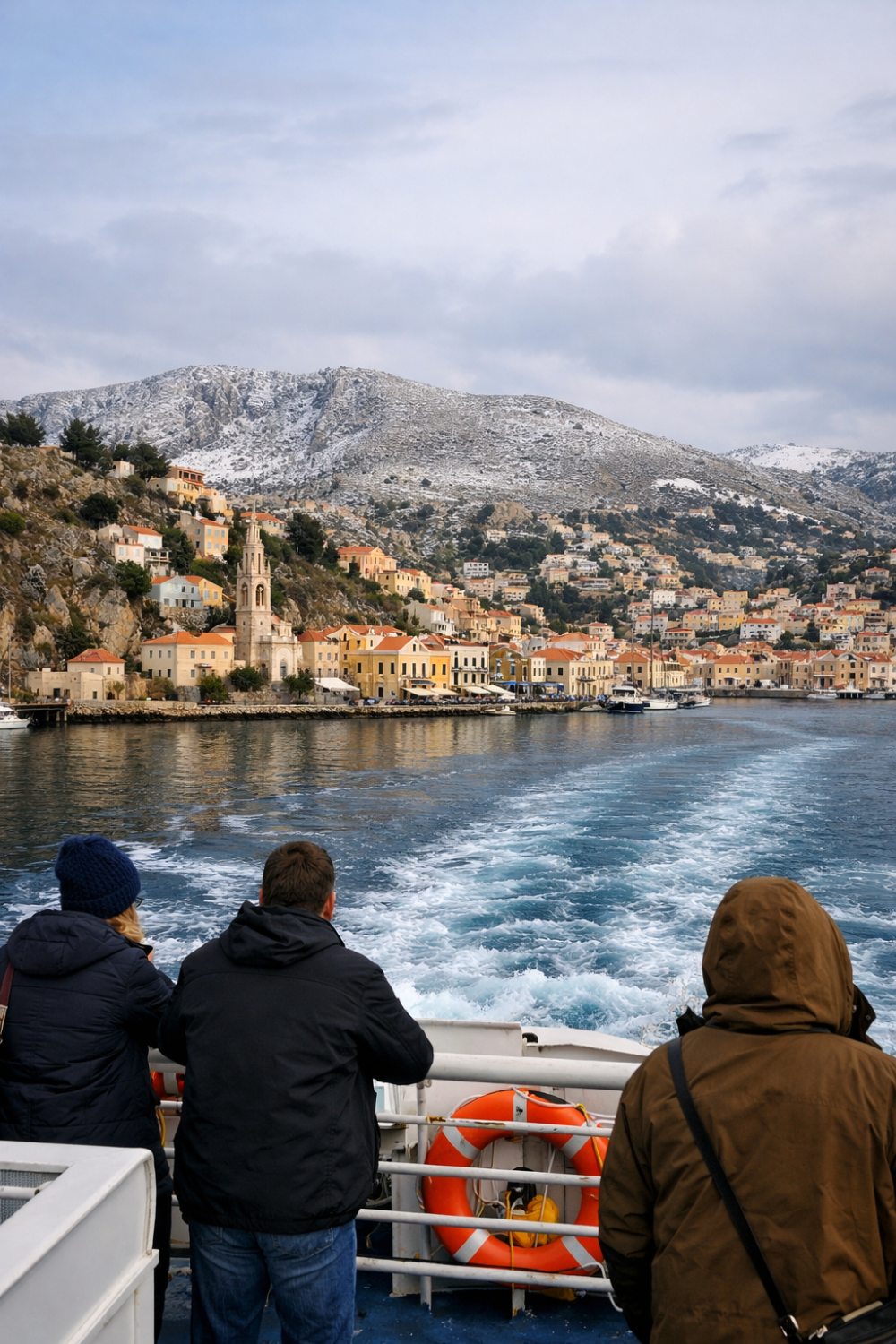
Temperatures vary by region, but in much of the country daytime weather tends to sit between single digits and the mid-teens Celsius. Nights are cold. In northern and mountainous areas, snow is common. In coastal and island regions, wind is often the defining feature rather than rain.
This is not a month for light jackets or outdoor dining late into the evening. Greeks dress accordingly: coats, scarves, boots. Life continues as normal, just at a slower pace.
Tourism and Daily Life
February is firmly off-season.
Tourism infrastructure is reduced, particularly on the islands. Some hotels and restaurants close entirely until spring, while others operate with limited hours and a local clientele. Ferry schedules are thinner, and many places function primarily around residents rather than visitors.
In cities, this has a noticeable effect. Public spaces are calmer. Museums and archaeological sites are quieter. Cafés and bakeries are full of locals rather than short-term visitors. The country feels lived in rather than staged.
Carnival Season (Apokries)
February often overlaps with Apokries, the Greek Carnival season leading into Lent.
Carnival in Greece is not a single uniform event. It varies by region and community, with some areas embracing parades and costumes, while others keep celebrations informal and local. One consistent feature is Tsiknopempti – a Thursday dedicated to grilling meat, marked by smoke, food, and social gatherings rather than spectacle.
Tsiknopempti
February often includes Tsiknopempti, a Thursday that falls during the Carnival period before Lent.
The name comes from tsikna — the smell of grilled meat — and that is essentially the point. On this day, meat is grilled everywhere: homes, balconies, street corners, workplaces. Smoke hangs in the air, and the smell travels far beyond where the food is actually being cooked.
Tsiknopempti is not a formal event. There are no fixed rituals beyond eating meat and doing it socially. Some people gather with friends or family, others eat at tavernas, and many workplaces mark it informally during the day.
Cheesefare (Tyrini)
Following Tsiknopempti, the final week before Lent is Cheesefare, known in Greek as Tyrini.
During this period, meat is avoided, but dairy is still eaten. Meals often include cheese, milk, yoghurt, butter, eggs, and dishes built around them. Pasta with cheese-based sauces, pies, and simple egg dishes are common. The food is plain and repetitive by design, marking a gradual transition rather than a sudden stop.
Like much of the pre-Lenten calendar, Cheesefare is not loudly observed. There are no public signals beyond what appears on the table. For many households, it passes without comment, understood through habit rather than explanation.
Cheesefare sits quietly between Carnival and Lent. It is practical rather than symbolic, and its meaning is carried through routine rather than ceremony.
Do you like Greek cheeses? And I am not just talking feta! Read more about Greek cheese here.
Food in Winter
Winter food in Greece is practical and seasonal.
In anticipation of Easter, soups, legumes, slow-cooked dishes, bread, olives, citrus fruit, and winter greens begin to dominate home cooking and taverna menus.
Citrus season is in full swing. Oranges, mandarins, lemons, and grapefruits are in season and widely available, used as fruit, juice, or added to cooking rather than treated as something special. Apples and pears continue through winter storage, while pomegranates are finishing their season.
Greens are central to eating in Greece. In the cooler months, mild and cultivated leafy greens — often grouped under horta — appear regularly, boiled or cooked down with oil and lemon.
Name Days in February
February includes several well-known name days in the Greek calendar, though they tend to pass more quietly than those in warmer months where many villages host a paniyiri. As with most winter observances, celebrations are usually low-key and domestic rather than social or public.
Some celebrated names include; Ypapanti, Photios, Theodoros, Theodora, Zacharias, Charalambos
Psychosavvato
February may include Psychosavvato, a Saturday set aside for the remembrance of those passed. It is observed through church services and private acts of memorial. Families may attend a memorial liturgy, light candles, or prepare kollyva, but participation varies widely. Like much of the winter religious calendar, it exists alongside everyday life rather than interrupting it.
February in Greece is a routine winter month. Daily life continues alongside seasonal food and religious observances, with little emphasis on celebration. It sits between winter and spring without particular significance.
Have you ever spent a February in Greece?