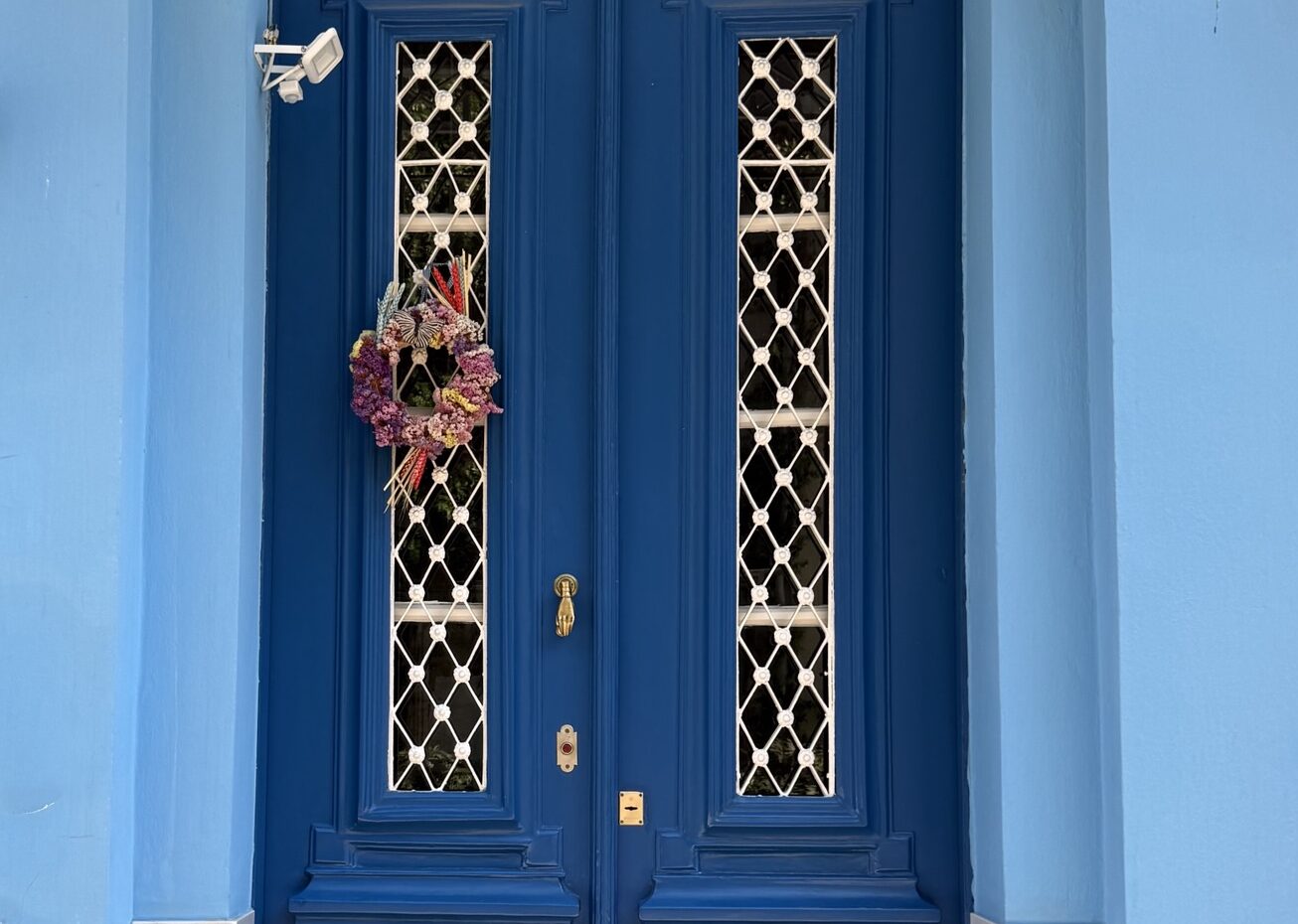
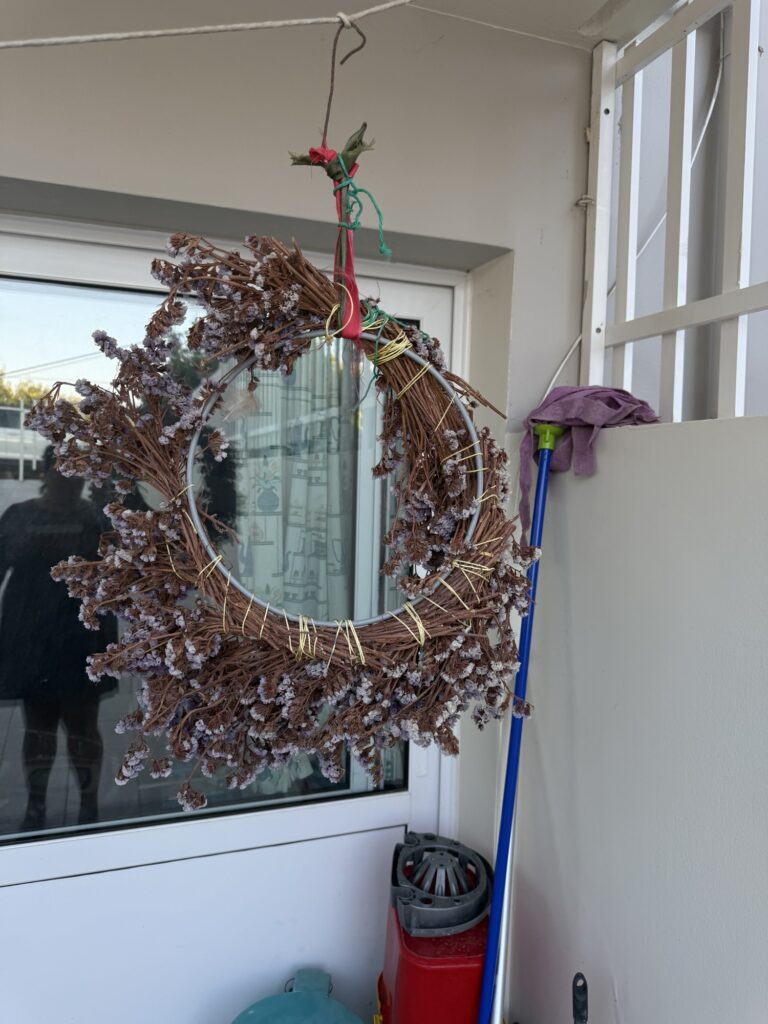
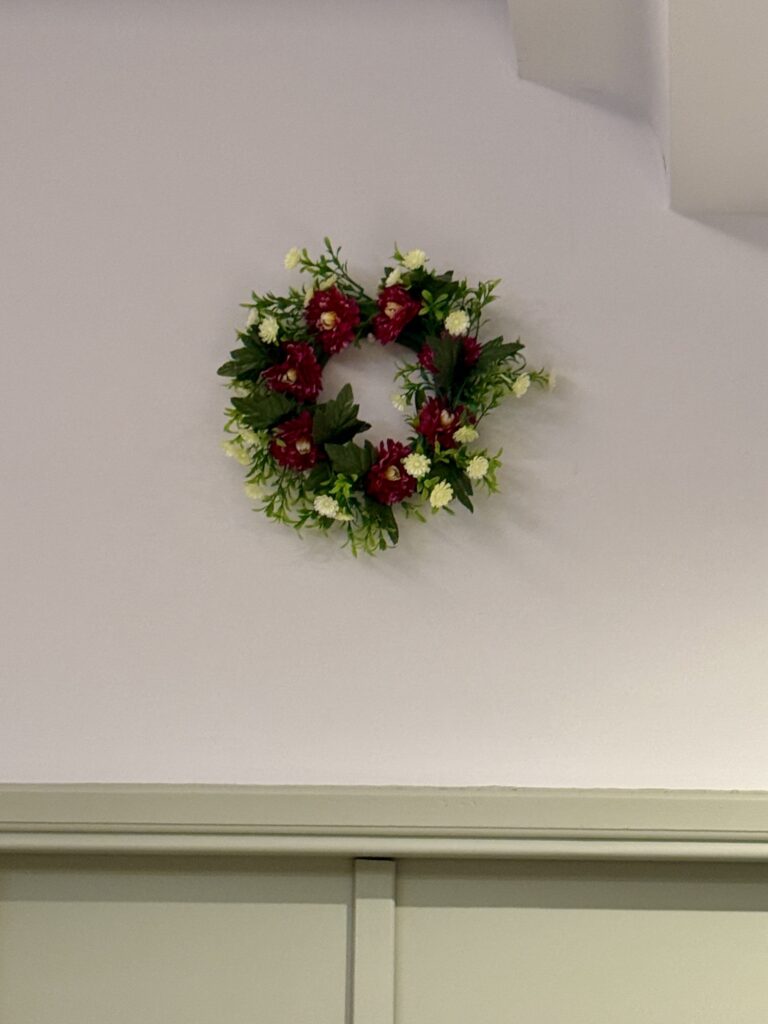
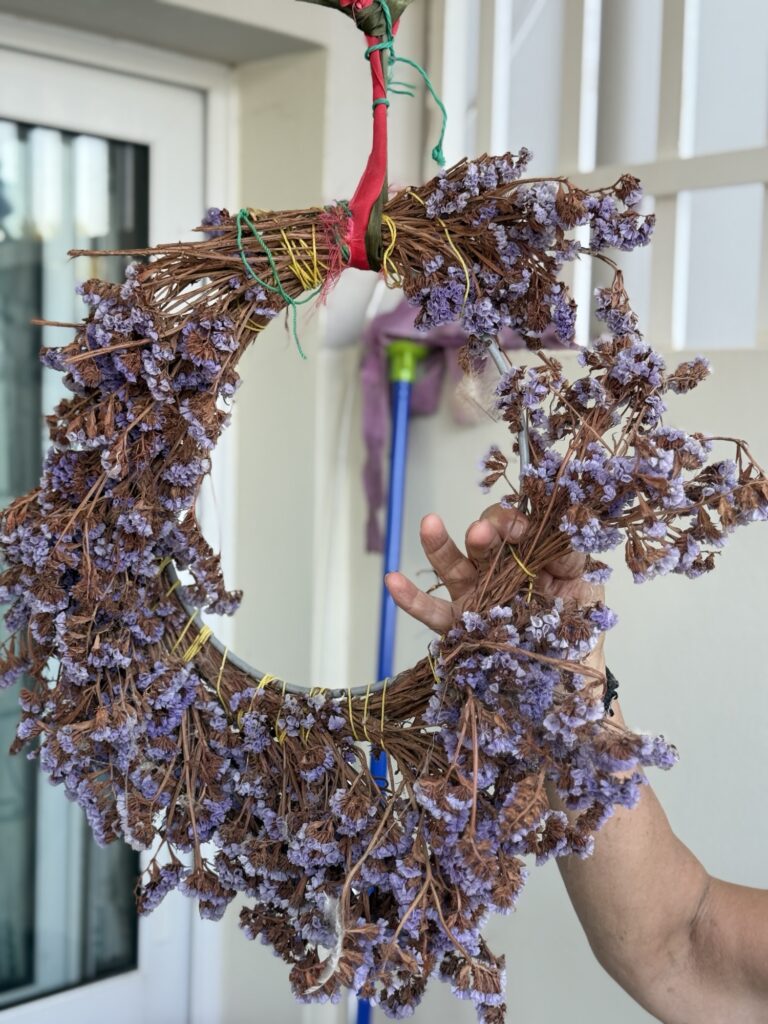
When I visited Greece last Summer, I was intrigued by the plethora of floral wreaths I saw everywhere. Not only were they hanging from the front doors of homes, I saw them in shops, verandahs, yards and everywhere in between. I had an inkling of what they might be, and upon asking an aunt, it seems I was right. These were Springtime or May Day (Protomagia) wreaths which are made and hung every year in May. Why were they still up and on display in September I asked? Well, my aunt responded, they stay up all year, or until the flowers wither away beyond recognition. I was more so surprised the enduring ubiquity of the tradition. Read on to find out what I learnt in my research.
What is Protomagia? (The Origins of May Day in Greece)
Protomagia – literally “first of May” – is the Greek celebration of the beginning of May and, more broadly, of spring’s arrival. Its roots reach back to pre‑Christian agrarian rituals that honoured nature’s return: renewed growth, longer days, and the promise of fruitfulness in fields and gardens. In antiquity, Greeks marked the renewal of life with offerings and celebrations for deities associated with fertility, harvest and the natural world. Over the centuries the custom absorbed layers of influence — from Byzantine religious practice to contacts with neighbours throughout the Mediterranean and the Balkans — so that what Greeks call Protomagia today is the product of long cultural exchange rather than an isolated, unchanged relic. It’s important to note that May rituals existed (and still exist in some form) all over Europe).
Ancient Roots of Protomagia
Protomagia isn’t a direct continuation of a single ancient Greek festival, but it does reflect older ideas about nature, renewal, and the changing seasons.
In ancient Greece, spring was deeply tied to cycles of life and rebirth. The myth of Persephone returning from the underworld to her mother Demeter symbolised the earth coming back to life after winter. At the same time, figures like Chloris – associated with flowers and blooming – reinforced the connection between spring and growth.
Seasonal festivals such as Anthesteria also marked this transition, celebrating new life and the rhythms of nature, even if they weren’t directly linked to flowers or May itself.
One of the clearest continuities is the use of floral wreaths. Ancient Greeks regularly made garlands for rituals, celebrations, and everyday life – a practice that closely resembles the Protomagia στεφάνι (wreath) still hung on doors today.
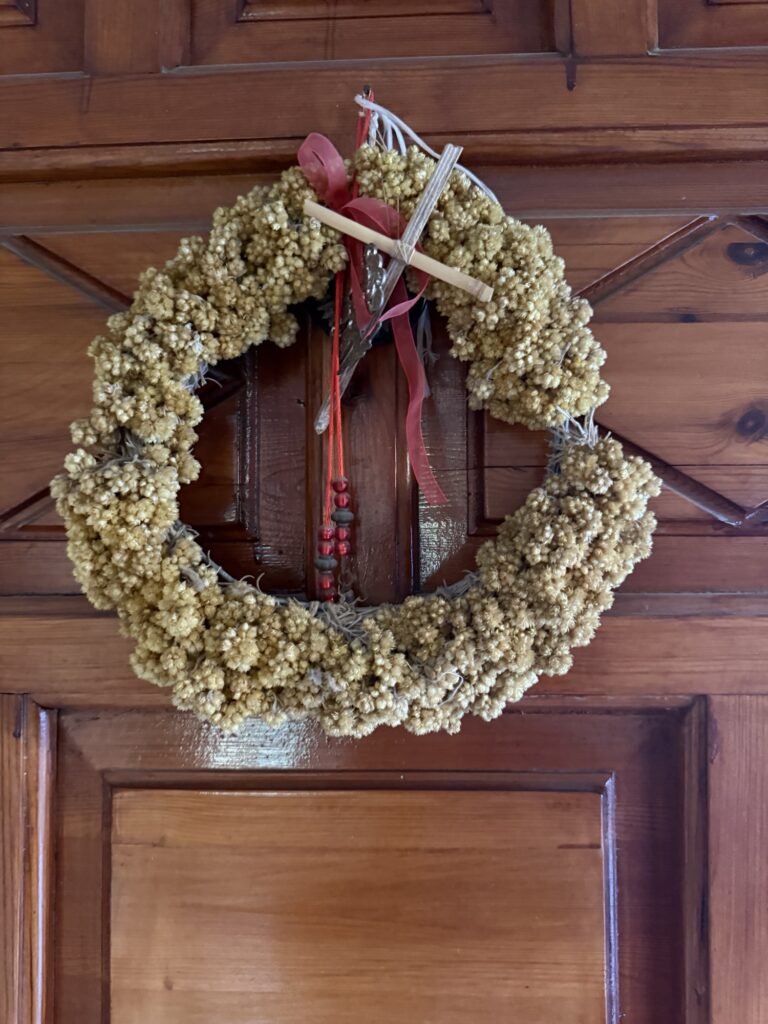
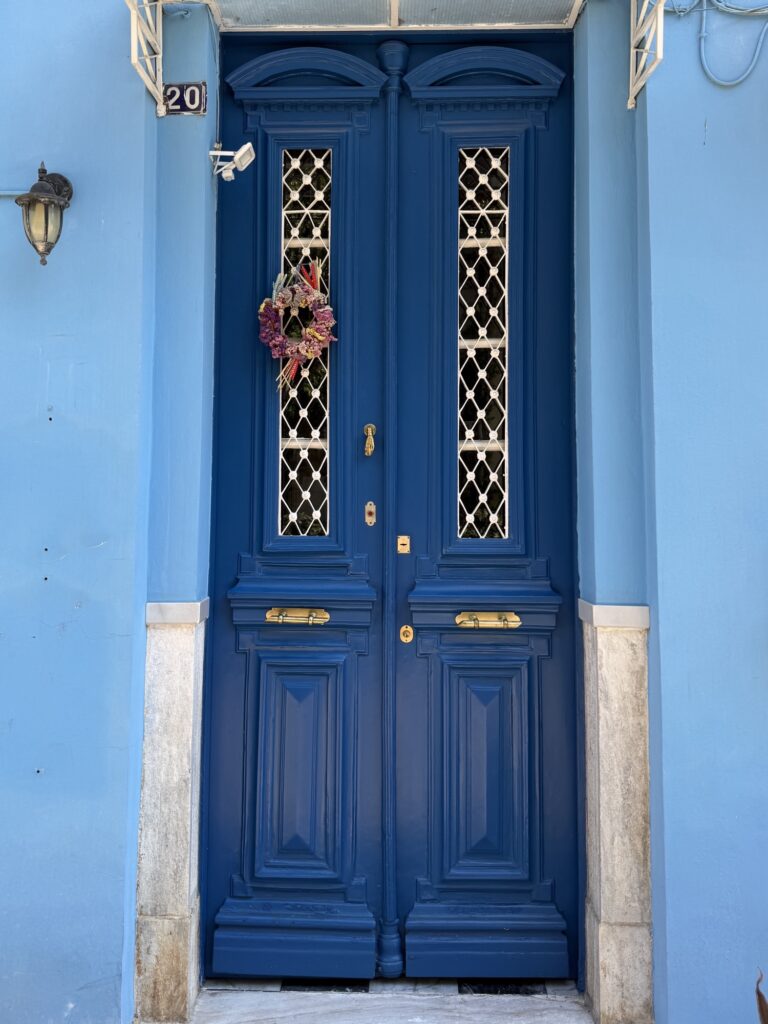
The Meaning Behind the May Day Wreath (Stefania)
The central symbol of Protomagia is the stefania, a wreath or garland made from freshly picked wildflowers and greenery. Typical materials include daisies, poppies, wild thyme, olive or laurel sprigs and other seasonal blooms and herbs depending on local flora. The exact recipe varies by region and household, but the common idea is the same: a ring of living plants that represents renewal, vitality and protection.
- Renewal and life: the living flowers celebrate the new season and the cyclical return of growth.
- Protection and blessing: hanging the wreath on the door is a symbolic wish for health, safety and prosperity for the household.
- Community: making the wreath –often by children or family members, is an act of passing on tradition and tending to nature together.
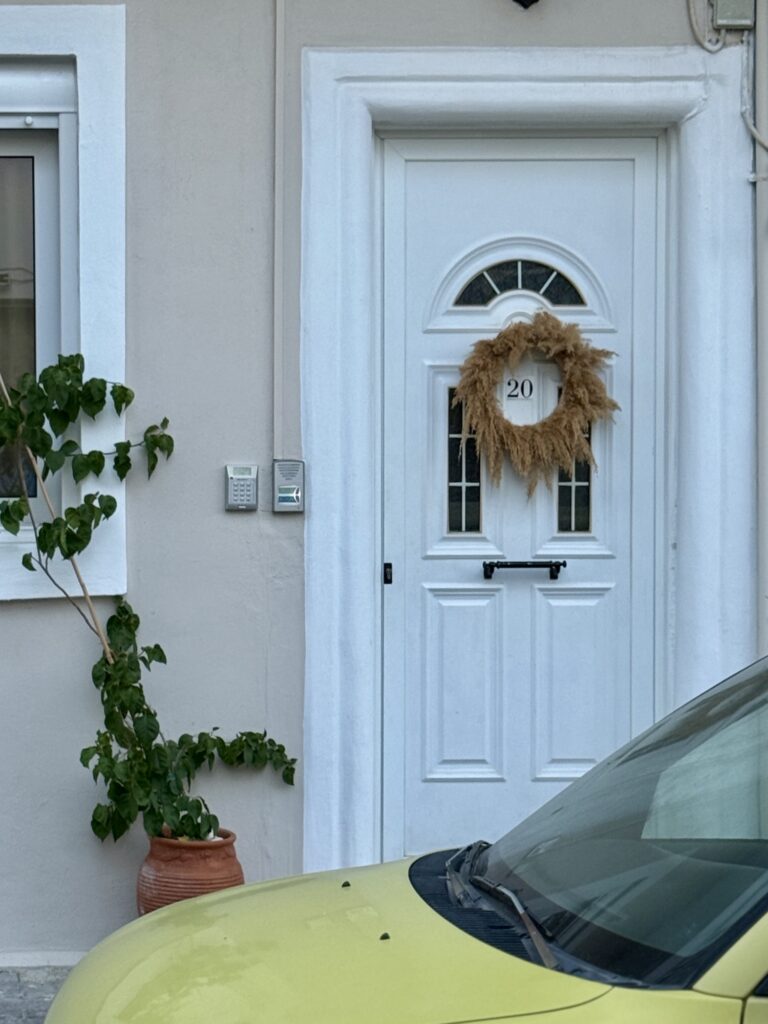
Placed on doors or over thresholds, the stefania marks the household’s welcome of spring and functions as a small talisman against misfortune, a visible sign that life is being renewed inside as well as outside the home.
How Greeks Celebrate Today
Protomagia remains a living, everyday tradition. On the morning of May 1 many families head to the countryside or nearby hills to enjoy the warming weather and to gather wildflowers. Children make wreaths at school or at home; in some places they also wear small crowns of flowers. People hang stefania on their front doors, balconies or even car mirrors. Urban residents who cannot travel often recreate the ritual on rooftops, terraces and window boxes.
- Family outings: picnics and short excursions to parks and villages are common, turning the day into a gentle springtime celebration.
- Children’s activities: schools and households run wreath‑making sessions, songs and simple crafts that pass the custom to younger generations.
- Regional variations: in some islands and villages particular flowers or herbs are preferred, and small local rituals or songs may accompany the wreath‑making.
- City life: in towns, markets and florists sell ready‑made wreaths or bunches of blooms for busy households.
It’s worth noting that May 1 is also International Workers’ Day in Greece (Labour Day), so city streets may host labour demonstrations and public events alongside the quieter, folkloric observances of Protomagia. The coexistence of the two traditions – the political and the seasonal – is part of the day’s contemporary texture.
According to the website Greece Is, the wreaths are meant to be kept up til midsummer, or the feast of St John Kildonas on 24th June. This is probably correct but going by what I saw last September, many people forget to take them down!
A Living and Enduring Tradition
Protomagia persists because it answers simple human needs: a connection to the seasons, a sense of shared identity, and a tangible way to mark continuity with the past. Hanging a stefania is a small, hands‑on ritual that ties a household to its environment and to community memory. As lifestyles change, the practice adapts — wreaths can be made from purchased flowers, arranged on balconies instead of doors, or taught in classrooms rather than at the family threshold — but the core meanings remain.
That capacity to evolve is itself part of the tradition’s strength: cultural practices endure not because they are frozen in amber, but because communities can rework them to fit modern life while keeping alive the values they embody — respect for nature, celebration of renewal, and the comfort of shared ritual.