In Greece, food serves more than nourishing the body. It is a social marker, a religious practice, a way of keeping time, and a source of comfort through repetition. Nowhere is this more evident than during the major winter holidays.
It is important to note that Christmas in Greece refers to the period between 25 December and 6 January, Epiphany, the day of Christ’s baptism. This period is known as the Feast of the Nativity and is considered fast free, with the exception of 5 January, the eve of Epiphany.
This season is commonly referred to as the Yiortes (Γιορτές).
Eating the same foods at the same time each year is not incidental. It marks the passing of the year in a way calendars cannot. When the Yiortes arrive, most Greeks already know what to expect on the table. The rhythm is familiar and reassuring.
What follows is a practical breakdown of Yiortes food traditions in Greece.
Christmas
Christmas food in Greece is closely tied to ideas of blessing, seasonality, and the land. The country’s geography and climate have always shaped what could realistically be produced and preserved during winter, while the Church continues to influence how food is framed and shared during this period.
Christopsomo (Χριστόψωμο)
Christopsomo is not everyday bread. It is made intentionally and often with great care. Decorated with crosses or symbolic shapes, it is prepared to bless the household. In many homes, it is broken rather than sliced, reinforcing the idea that it is shared food rather than something individual.
Like many ritual foods in Greece, Christopsomo sits between the spiritual and the domestic. It reflects the idea that food can function as offering as much as nourishment.
This tradition appears to be less common in the diaspora. Many families no longer make Christopsomo at home, although it has seen renewed visibility through diaspora media and online spaces.
Melomakarona (μελομακάρονα)
Melomakarona belong to Christmas because they are generous by nature. Honey soaked, spiced, and soft, they are made in large quantities and meant to be shared. They travel easily between homes, workplaces, and neighbours.
They are not delicate or precious. They are rustic and practical, and their appearance alone signals the season.
Their ingredients matter. Honey represents abundance, walnuts fullness. Eating them at Christmas reinforces warmth and continuity during the darkest part of the year.
Kourabiedes (κουραμπιέδες)
Kourabiedes are simpler in character. Made with butter and almonds and finished with powdered sugar, they are usually offered to guests with coffee. They are eaten slowly and carefully, partly out of habit and partly to avoid wearing the powdered sugar everywhere.
They are strongly associated with winter and the holiday period, and most Greeks need little explanation beyond seeing them on the table.
Pork based dishes
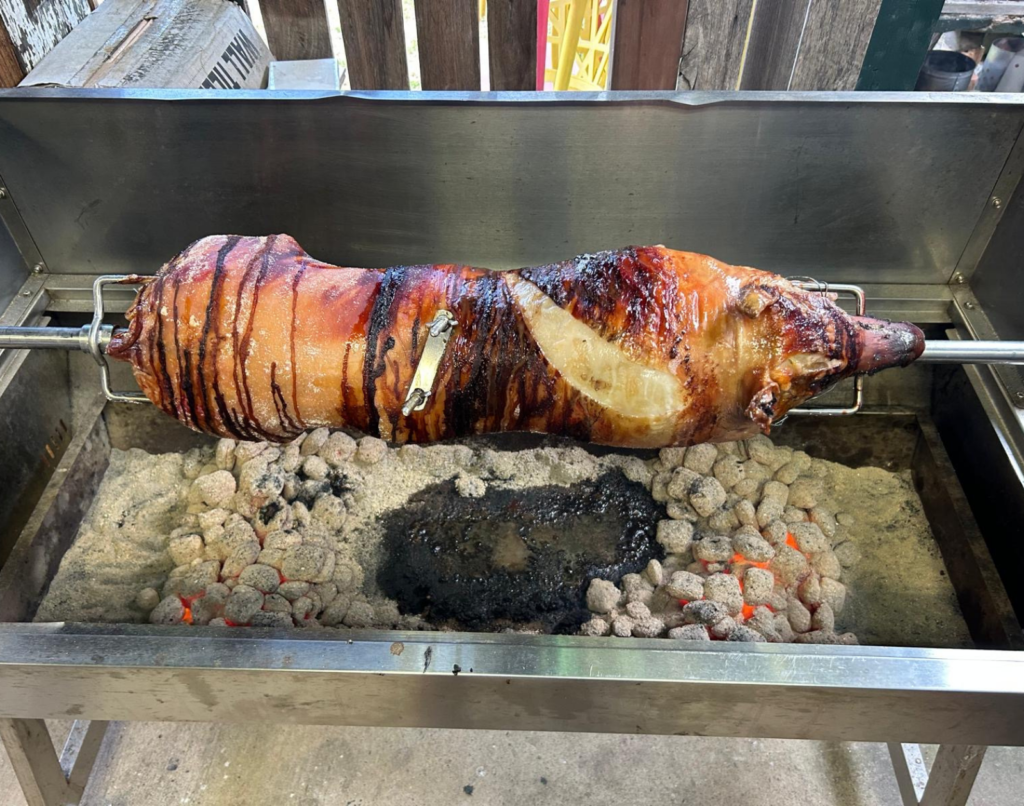
Christmas is also when pork appears more prominently on Greek tables. This tradition comes from older rural practices of winter slaughter, preservation, and shared labour. Pork represented security and planning for the colder months ahead.
Although scarcity is no longer the driving reason, these dishes remain. Oven roasts, sausages, and slow cooked meats reflect a time when winter food needed to sustain rather than impress.
In Australia, many Greek families favour lamb when cooking meat on a spit. This may reflect the strong association between lamb and celebration in the diaspora, particularly Easter, where lamb became central and widely available.
New Year (Πρωτοχρονιά)
If Christmas focuses on blessing the home, New Year centres on luck and beginnings.
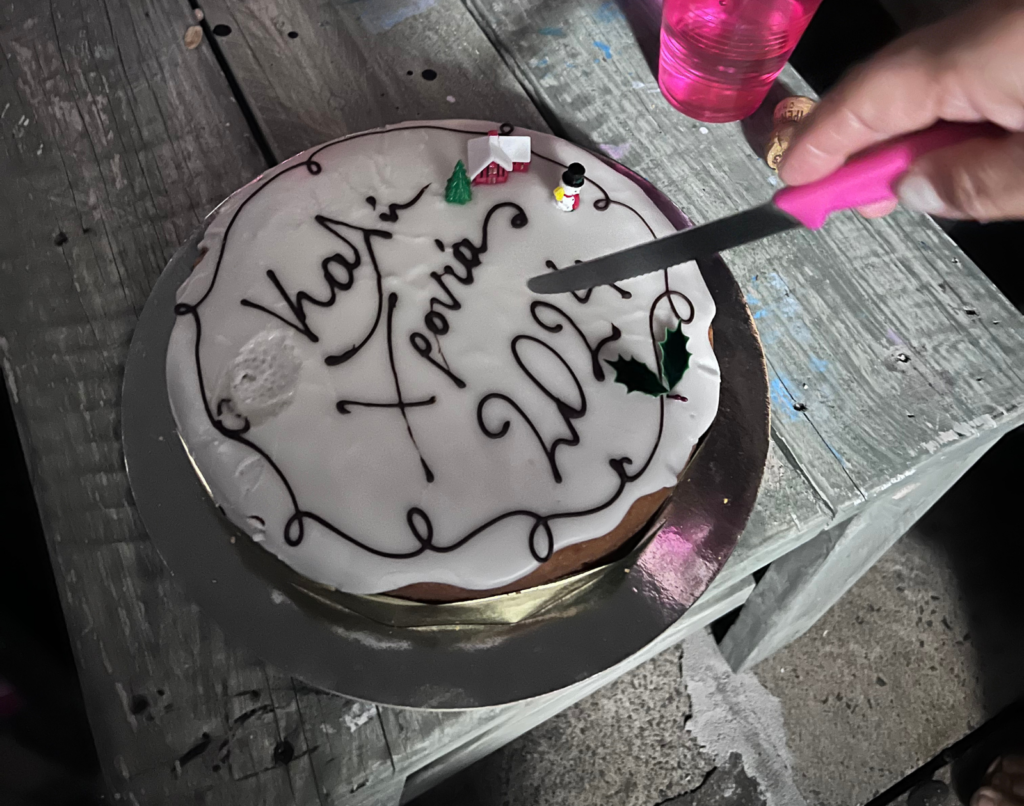
Vasilopita (Βασιλόπιτα)
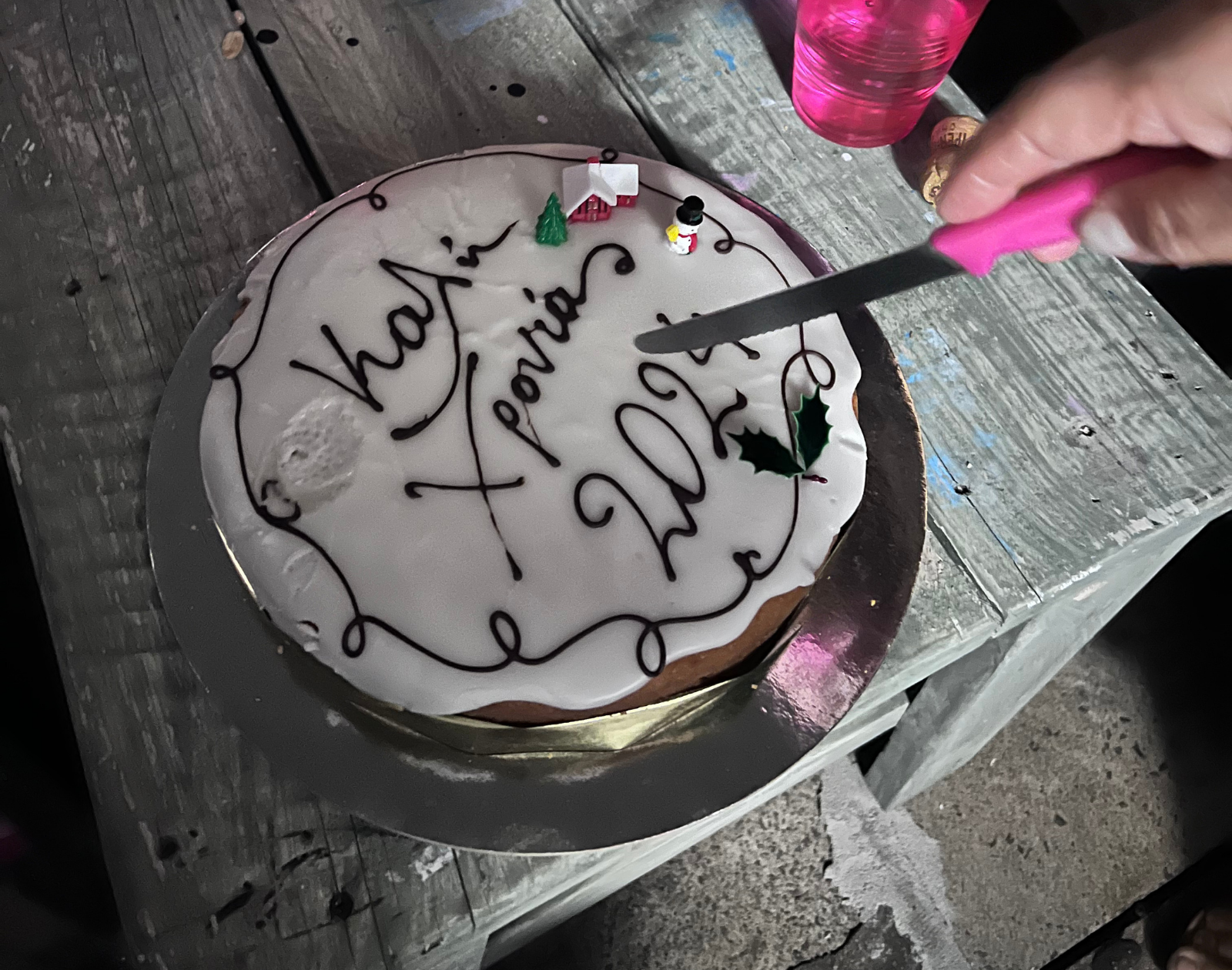
Vasilopita is eaten with attention. The cutting follows a set order in many households, beginning with a piece for Christ, then the house, followed by the family. The moment before the coin is found is familiar and often quiet.
The cake itself varies greatly from family to family, but the ritual remains consistent.
The hidden coin is not superstition alone. It represents hope made tangible. For a brief moment, luck feels evenly distributed.
Some families cut a tsoureki instead of a traditional vasilopita. In practice, it makes little difference. The ritual matters more than the form, and both are equally welcome at the table.
The pomegranate (ρόδι)
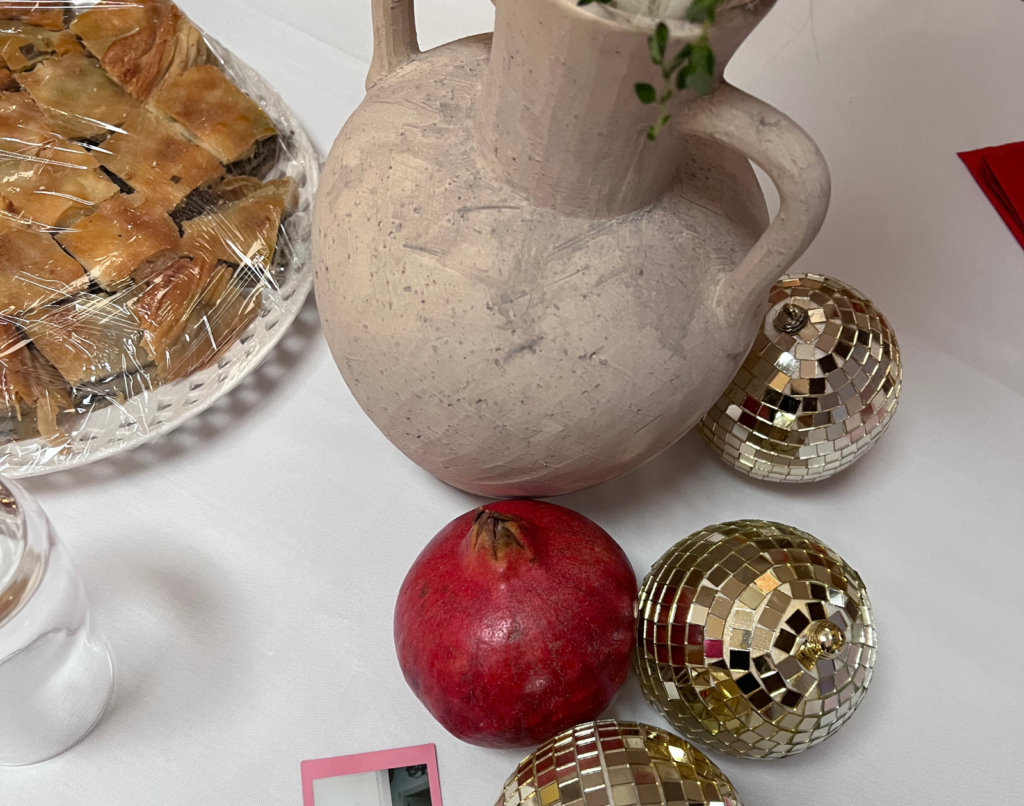
The pomegranate is not placed gently. It is smashed at the threshold of the home. The sound, the scattered seeds, and the mess all matter.
Prosperity is imagined as abundance that cannot be contained. This act takes place at the boundary of the house, linking what enters the home with what the year is expected to bring. Here, food is not eaten but enacted.
January and Epiphany
After New Year, the tone of the season begins to shift.
Loukoumades (λουκουμάδες)
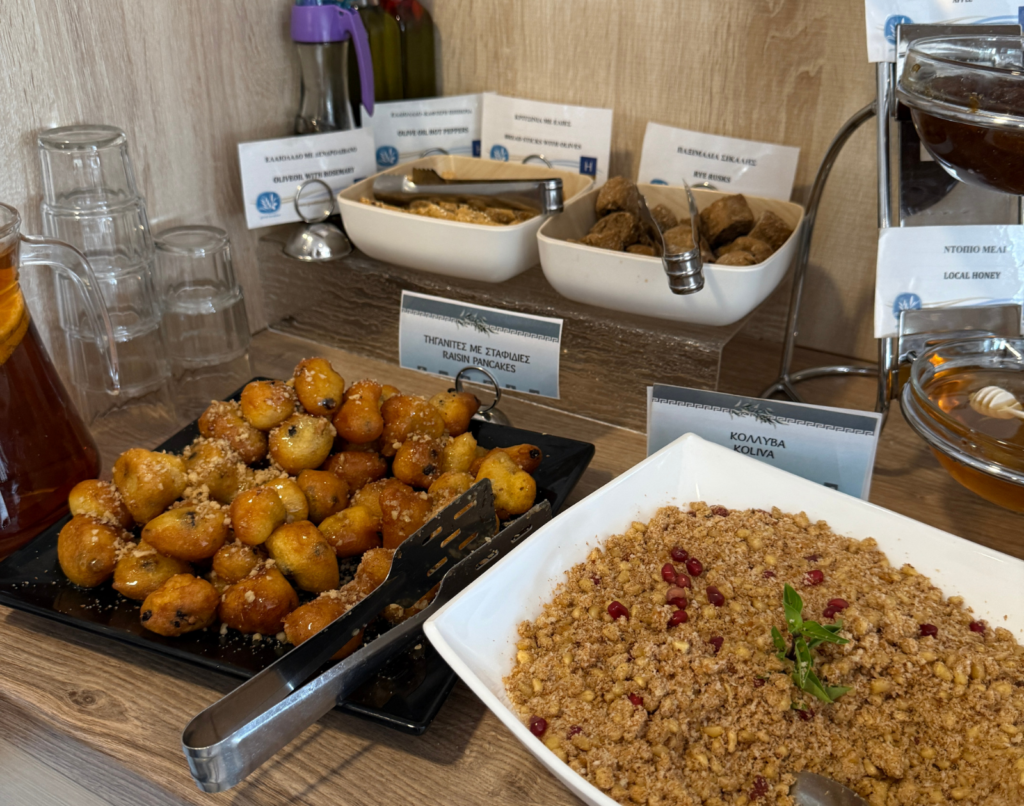
Loukoumades appear in January not only as comfort food, but also as offerings for the kallikantzaroi, the mischievous goblins said to appear during this period. They are also commonly eaten after church, particularly on feast days.
Loukoumades are communal, nistisima, and easy to share. Their continued presence reflects a quieter form of celebration that suits the slower pace of January.
Epiphany (Θεοφάνεια)
Many online sources list foods such as baklava, diples, or lagana as Epiphany dishes. Whether these associations are traditional or the result of modern repetition is unclear.
What is consistent is the practice of offering food to visitors during name days and religious occasions, which may explain how these connections formed.
The only foods clearly linked to Epiphany in traditional sources are palikaria, a fasting grain dish associated with Crete, and fotokoliva, a variation of koliva also found in Cretan tradition.
What’s In Season?
December and January mark deep winter in Greece, and the food of the season is also shaped by the land.
This is the heart of citrus season. Oranges, mandarins and lemons are at their best, eaten fresh or preserved as spoon sweets.
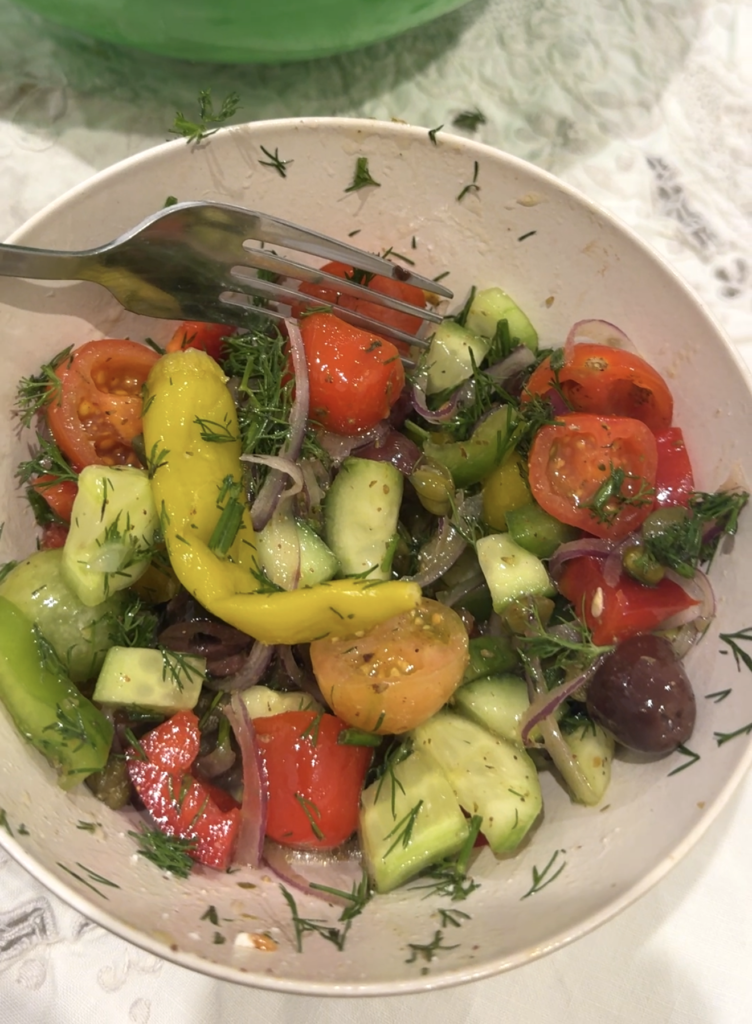
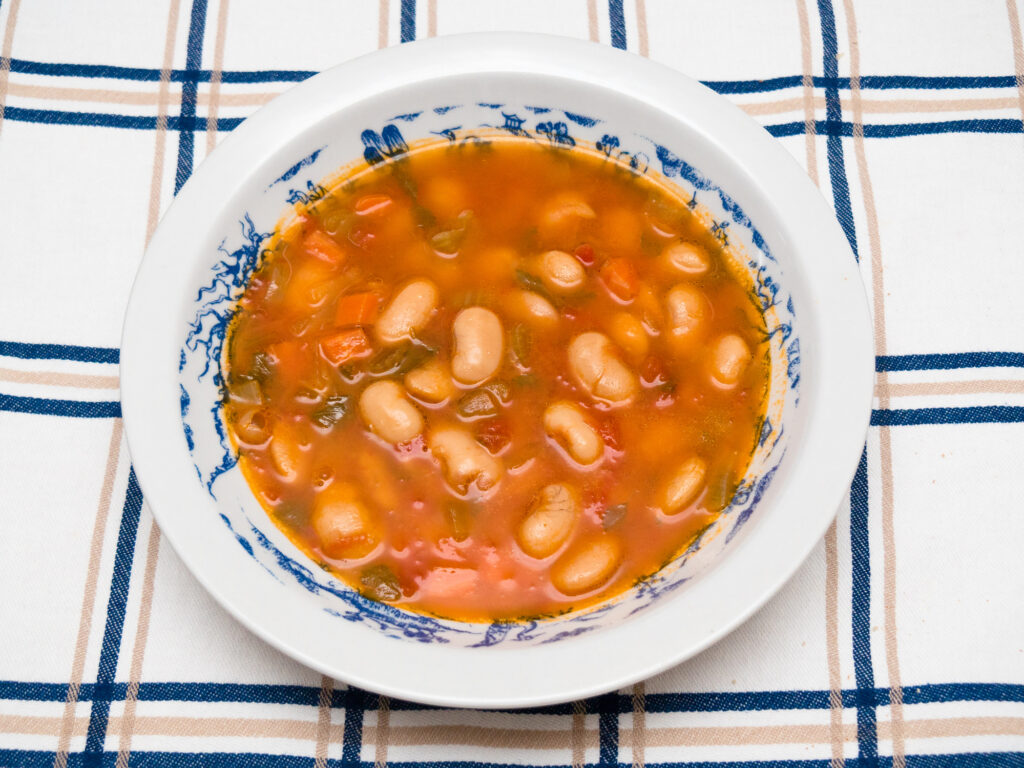
Winter vegetables and greens dominate home cooking. Cabbage, leeks, carrots, wild horta, spinach, and chicory are abundant. These are typically boiled, braised, baked, or turned into pies and soups—simple food designed to warm and sustain rather than impress.
December and January also sit within the olive harvest period, which usually runs from late autumn through early winter. In many regions, olives are picked between November and January, with pressing following soon after. This is when new-season olive oil appears—greener, cloudier, and more peppery. Fresh oil is often tasted simply, drizzled over bread, salads, boiled greens, or vegetables, and treated as something special rather than background fat.
Closing reflection
Greek winter food traditions are practical as much as they are symbolic. They reflect seasonality, religious calendars, and habits that have been repeated long enough to feel natural rather than ceremonial.
These foods appear when they do because they always have. Over time, timing becomes meaning.
That is why the Yiortes table feels familiar year after year. Not because it is elaborate, but because it follows a rhythm that still makes sense.