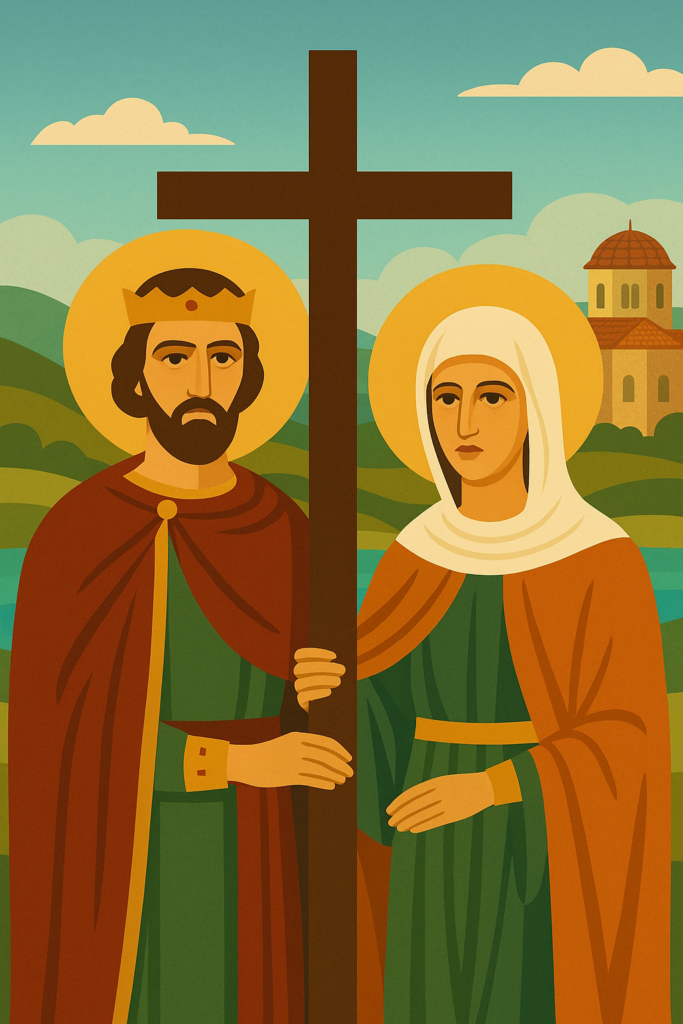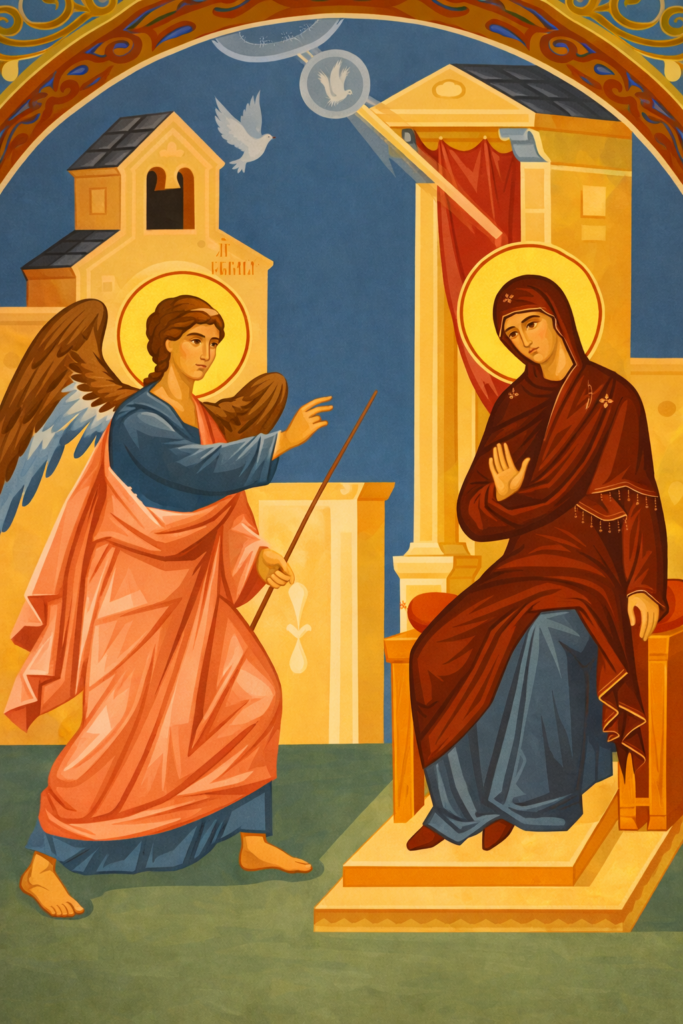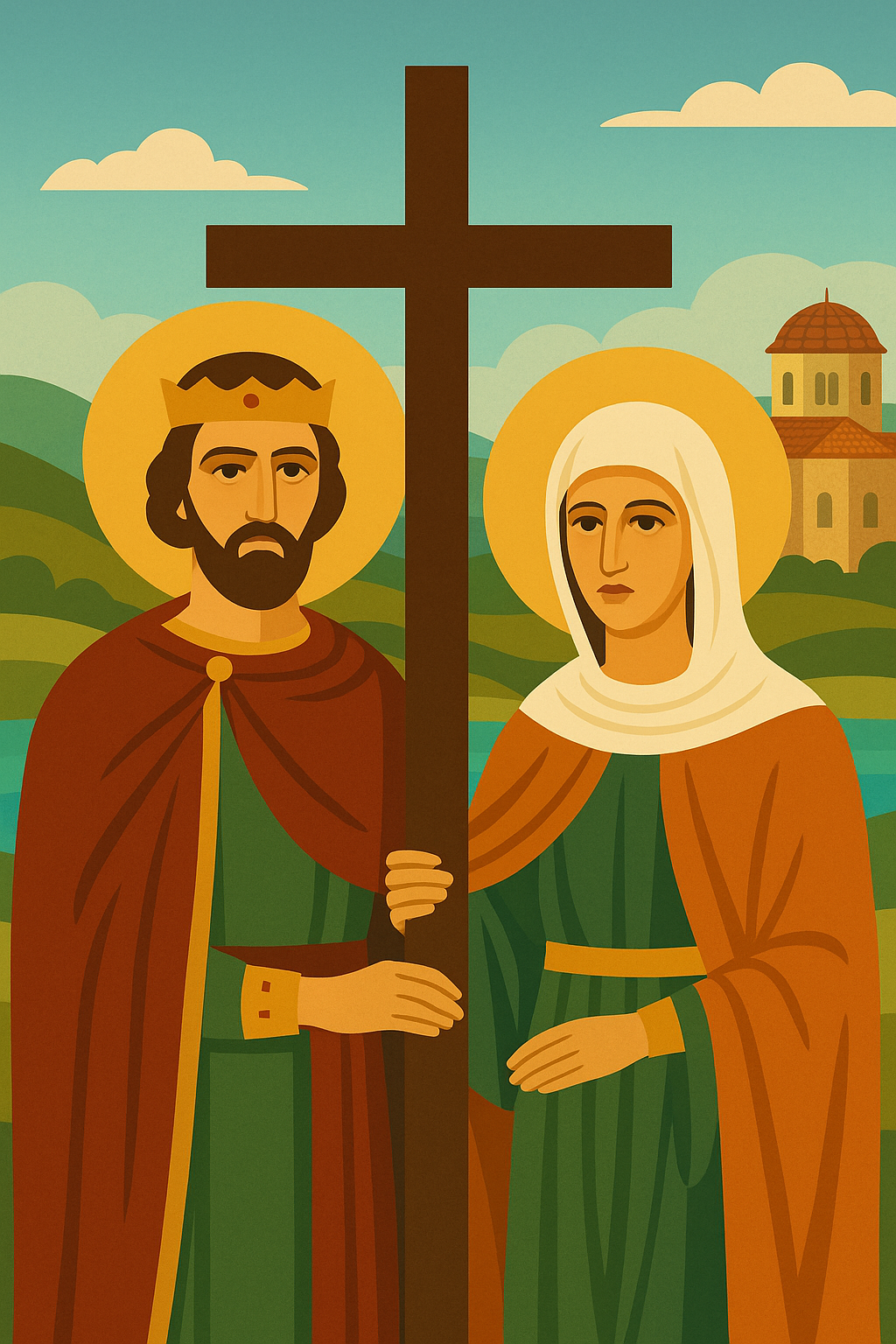
It might seem strange, but in Greece, your birthday might pass without much acknowledgment. Your name day, though? That’s another story.
Have you ever celebrated a name day and wondered why this tradition still lingers, even in diasporic societies?
What Is a Greek Name Day?
A name day (γιορτή, yiortí) is the day associated with a saint or religious figure you’re named after.
It’s most commonly practiced in Greece and Greek communities worldwide, tied to the calendar of the Greek Orthodox Church.
If your name matches a saint, you celebrate on that saint’s feast day. Quite often you’ll receive calls, texts, and maybe even visitors. Whilst cake is not always required, desserts are essential!
How Are Name Days Celebrated?
There’s no single “correct” way to celebrate a Greek name day, and each family does it differently. That said, a few traditions show up again and again:
Phone calls and messages
Friends, relatives, and acquaintances reach out with Χρόνια πολλά (“many years”). Even people you haven’t spoken to in months might check in.
Open-door hospitality
Traditionally, the person celebrating doesn’t throw a party—people stop by. Coffee, sweets, or whatever happens to be in the house are enough.
The person celebrating “shouts”
In offices or schools, it’s common for the celebrant to bring pastries, chocolates, or cake “for everyone,” with minimal fuss. This is especially common in Greece.
Religious rituals
Some people attend church or light a candle for their patron saint. Others may burn liváni (λιβάνι, incense) at home or light a kandiláki, the small oil lamp kept near icons. Some might visit the cemetery to light a candle for those whose name day it is and who have passed away.
Low-pressure gifts
Gifts aren’t expected, though close family might give something small such as flowers, or a bottle of wine.
Diaspora
Outside Greece, celebrations often shrink to calls, texts, or a quiet dinner, but the acknowledgment still matters. During early migration years, name days were a big deal, with many families celebrating with an annual lamb on the spit.
Where Did This Tradition Come From?
- The custom comes from early Christian calendars that honored saints on specific days.
- Naming children after saints was believed to offer protection and guidance.
- In villages, name days were more communal than birthdays—easier to remember, easier to share.
- Some names appear multiple times on the calendar; families choose which date they follow.
- Not all Greeks celebrate equally—practice varies by region, generation, and belief.
- Similar traditions exist across Eastern Europe and the Balkans, with local twists.
Personally, I have noticed that name days do carry more significance in Greece, beyond religious life. For example, regional panigyria (festivals) may be aligned with patron saints. People often take cakes to work on their name day, and there are public holidays for some saints’ days.
Here in Australia, as we move into third and fourth generation diaspora, name days are more of a reason to check in with a friend or family member—usually via text or a Facebook message. Sometimes it’s a phone call, someone saying Χρόνια πολλά! (Chronia pollá — “many years”). And that’s it. Overall, it’s definitely less communal and social.
Useful Takeaways (The Practical Stuff)
Common name days:
- Giorgos / Georgia → April 23
- Maria → August 15
- Dimitris → October 26
- No saint name? Some people celebrate on All Saints’ Day or skip it altogether.
- You don’t invite people—they often show up or call.
- Gifts are optional; sweets are expected.
Do you celebrate your name day—or did it fade over time?
And if you don’t have one, would you want one if you could choose?