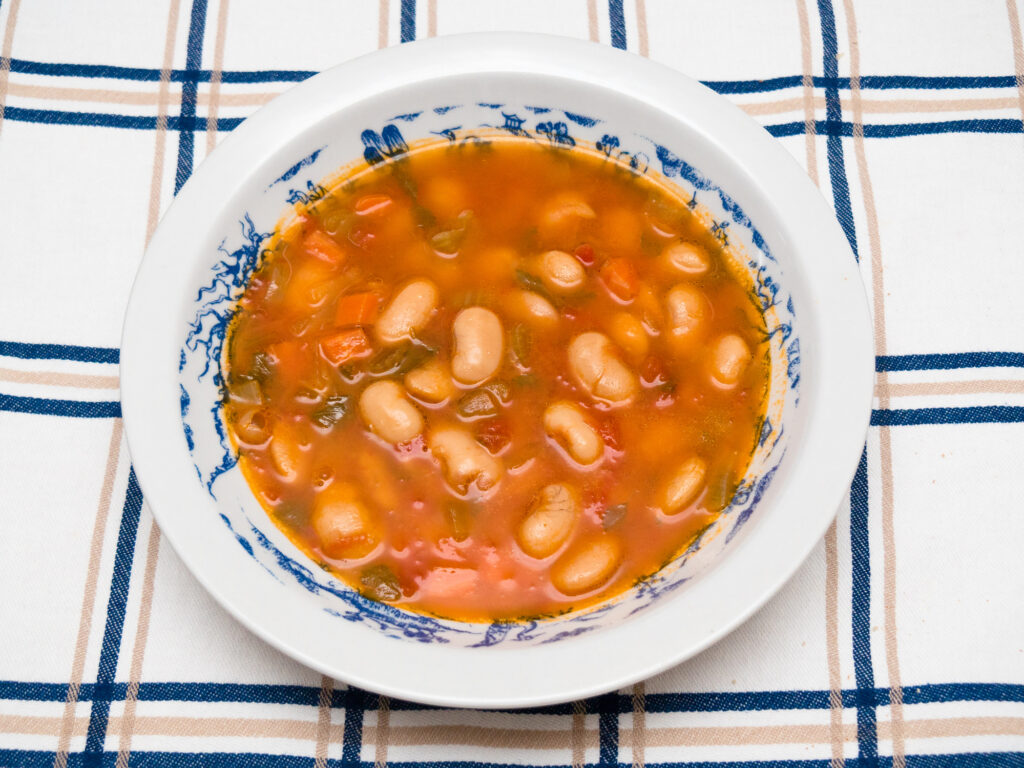
Whilst Great Lent in the Orthodox calendar is 40 days, many of us in the diaspora have adopted some form of modified version of lent; whether it’s no meat for 40 days, or giving up something else. For most, it looks like a strict fast (vegan diet) for a week, with no oil on Good Friday.
Nistisima (lenten food) means simple, (almost) plant-based food tied permissible for consumption during this time (shellfish is also permitted).
Traditionally, this was almost always fasolatha, fakes and horta. But this combo might not be so kind to everyone’s gut or tastes.
I’ve compiled a week of meal ideas that focuses on seven simple Greek inspired dishes you can make without banned animal products and with plenty of flavour.
Briám
Briám is the Greek version of ratatouille, a tray of mixed roasted vegetables in tomato and herb sauce. Zucchini, potatoes, eggplant, and tomatoes mingle with garlic and oregano and are finished with a generous splash of olive oil. It is easy to make and stands in as both side dish and main course during the fast. Briám showcases seasonal produce and the Greek habit of letting ingredients sing on their own.
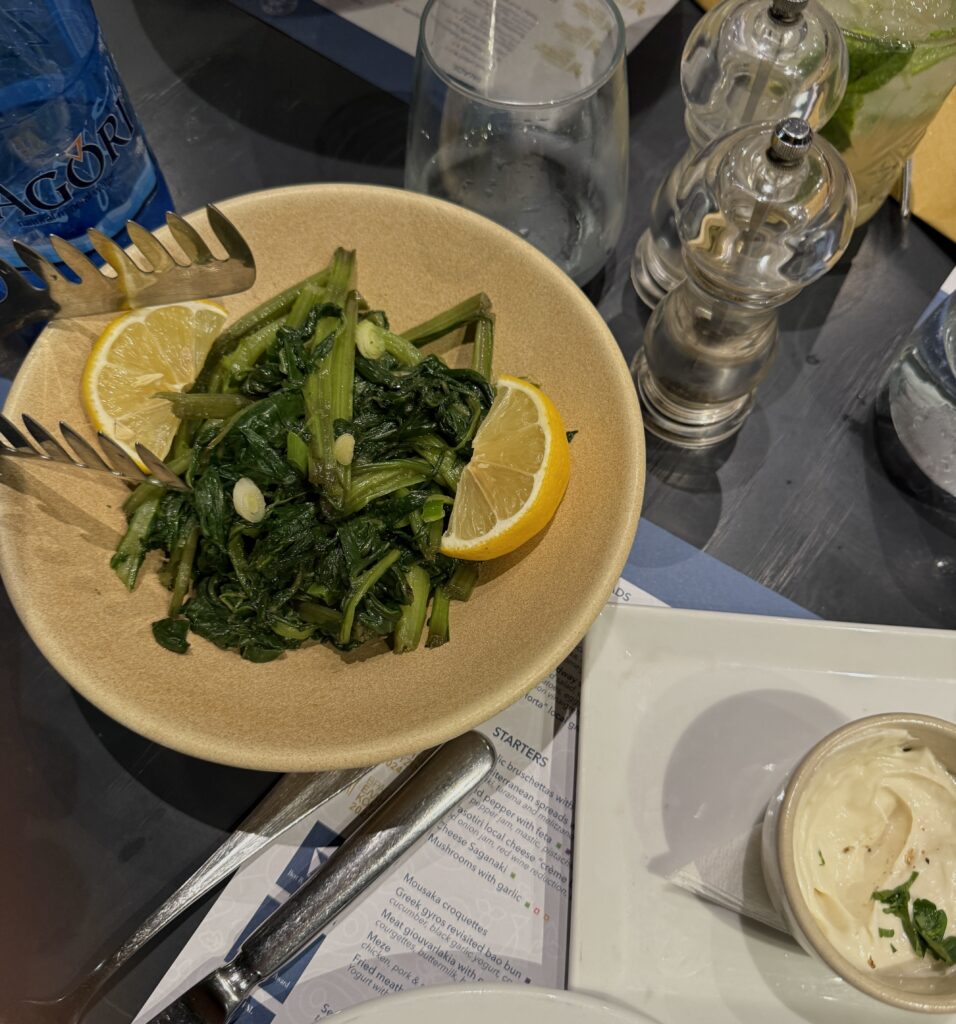
Horta Vrasta
Horta means boiled greens and covers a range of wild or cultivated leaves like dandelion, chard, or spinach. The greens are simply boiled, dressed with lemon and olive oil, and served with bread or potatoes. Eating horta connects you to the countryside and to a lifetime of quick weekday meals. You can mix it up by adding olives, capers, chilli flakes or even roasted red peppers. Yum!
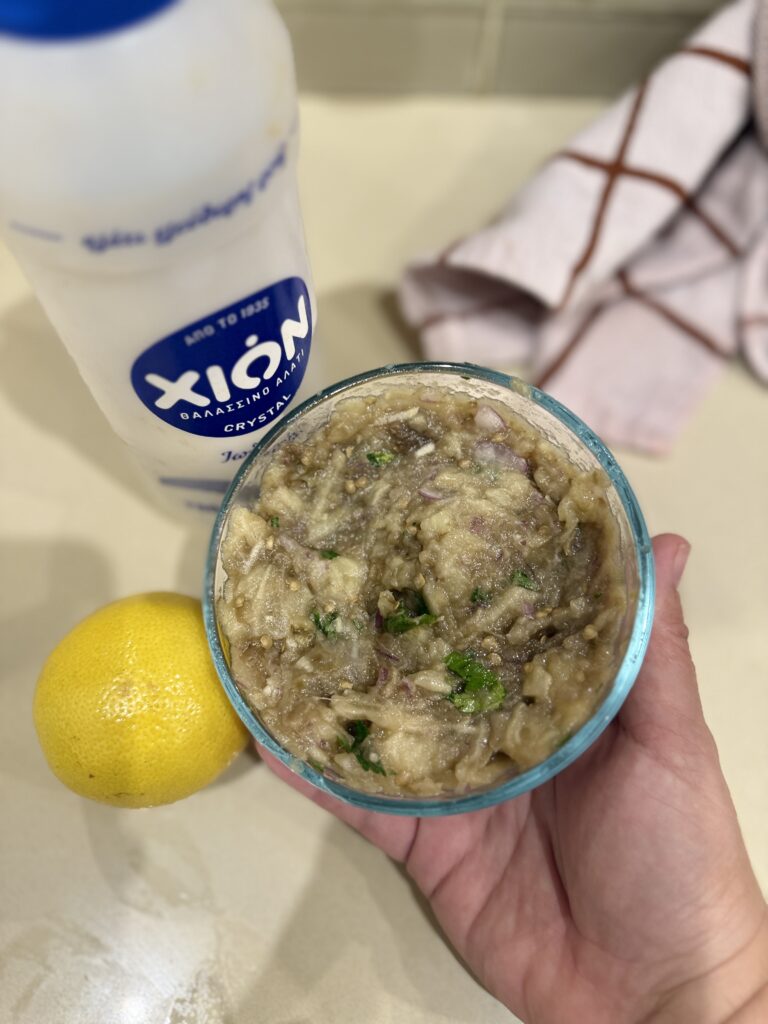
Melitzanosalata Toast
Melitzanosalata is the smoky eggplant dip that often headlines meze plates and fasting spreads. Roasted eggplant is mashed with garlic, olive oil, vinegar or lemon, and sometimes tomatoes or herbs. It is versatile, good as a dip or as a topping on toasted bread, and almost always vegan in its traditional form. This dish proves a little smoke and olive oil go a long way in satisfying cravings for richer textures.
Patatosalata
The Greek way of making potato salad is so easy and delicious! Simply boil potatoes and mix with chopped shallots and dill. Dress with lemon, oil and salt and pepper. This tastes even better when it’s been left to marinate in the juices! You can also swap out shallots for red onion, which also tastes really good.
Dolmades Nistisimi
Dolmades are vine leaves stuffed with rice, herbs, and sometimes pine nuts or currants for a sweet note. The fasting version skips the meat and focuses on fragrant fillings of dill, mint, and lemon. They are a labor of love at family gatherings and a perfect finger food for a shared table. These are no a quick make, but the good news is that you can find them in cans on supermarkets shelves and make an awesome addition to a Greek vegan graze (just wash them as they can get slimy).
Dakos
Dakos is a Cretan classic that proves simple ingredients can still feel like a treat. A barley rusk is topped with chopped tomato, oregano, and plenty of olive oil, then finished with olives or capers. Traditionally it includes feta, but the nistisima version skips the cheese. As the tomato juices soak into the rusk, it softens just enough while still keeping a bit of crunch. It is fresh, satisfying, and takes only minutes to assemble, making it one of the easiest options on the list.
Kolokithokeftedes
Kolokithokeftedes are zucchini fritters packed with herbs like dill and mint. In their usual form they include egg and cheese, but during Lent they can be adapted using flour or chickpea flour to bind everything together. Pan-fried until golden, they are crispy on the outside and soft in the middle. These do take a bit more effort — grating, draining, mixing, and frying — but they are still very manageable and worth it when you want something that feels a little more special. Serve with crusty bread and taramasalata and you have a complete meal!
Melitzanes Imam
Imam bayildi is one of those dishes that tastes even better the next day. Eggplants are slowly cooked with onions, garlic, and tomatoes until they collapse into a rich, silky texture. The name loosely translates to “the imam fainted,” supposedly from how good it smelled (or how much olive oil it used). It is not difficult, but it does require time and patience, making it ideal for a slower cooking day rather than a quick weeknight fix. The name of this dish is a reflection of the overlap and similarities of Greek and Turkish, a natural result of these cultures residing closely over many centuries.
Arakas
Arakas is a simple pea stew cooked with tomato, onion, dill, and olive oil. It is one of those quiet, underrated dishes that shows up often in Greek homes. The peas become soft and slightly sweet, balanced by the acidity of the tomato and the freshness of the herbs. It is very easy to prepare and mostly hands-off once it is simmering, making it a reliable go-to when you want something warm with minimal effort.
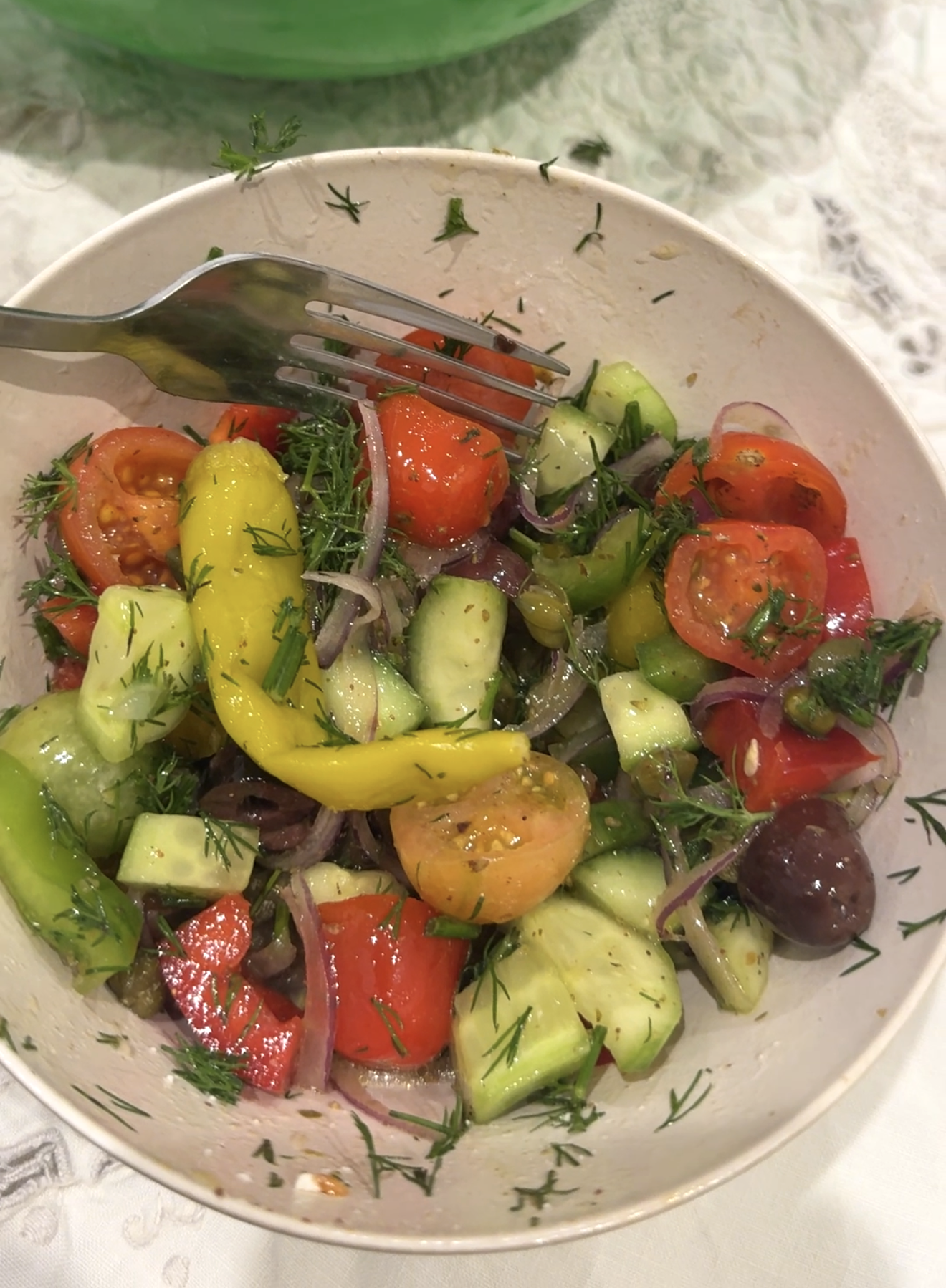
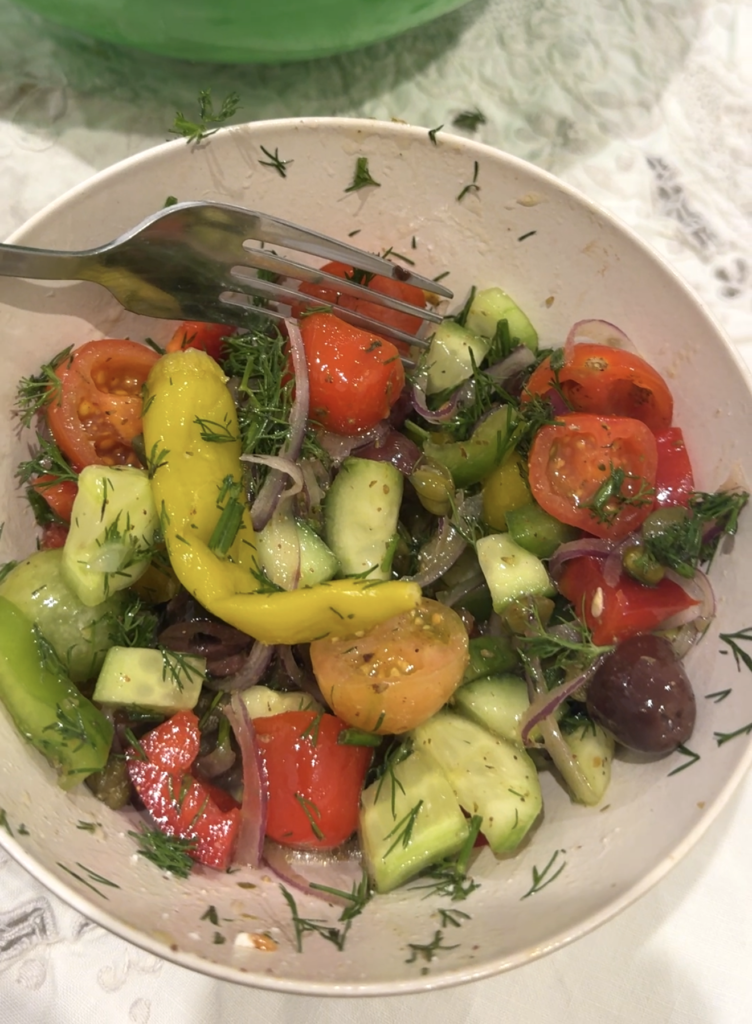
Greek Salad
A traditional Greek salad without feta might sound incomplete, but it still holds its own. Tomatoes, cucumber, capsicum, red onion, and olives come together with oregano and olive oil for something crisp and refreshing. The absence of cheese actually lets the vegetables shine a bit more. I like to up-level this by mixing in olive tapenade and chopped avocado which gives it a nice richness. Another combo to try is dill and green peppers.